

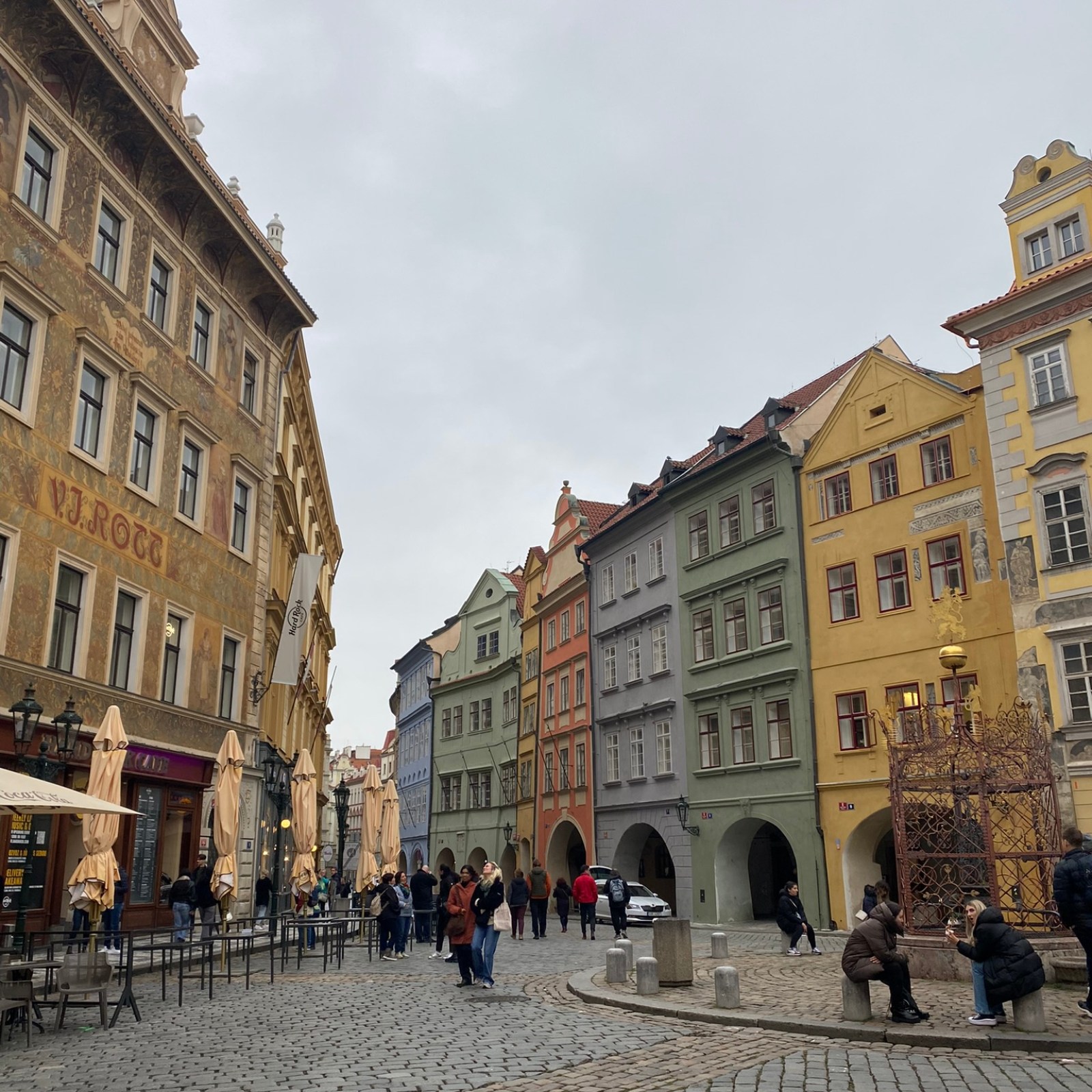
Ahh dear Prague… There is never enough time to tell or write. The best thing is to go and see it. Calling it a dreamlike city, a fairy-tale town, would still fall short. Architecture preserved for centuries takes you beyond a film set. It answers the question: “What would a medieval city have been like?”
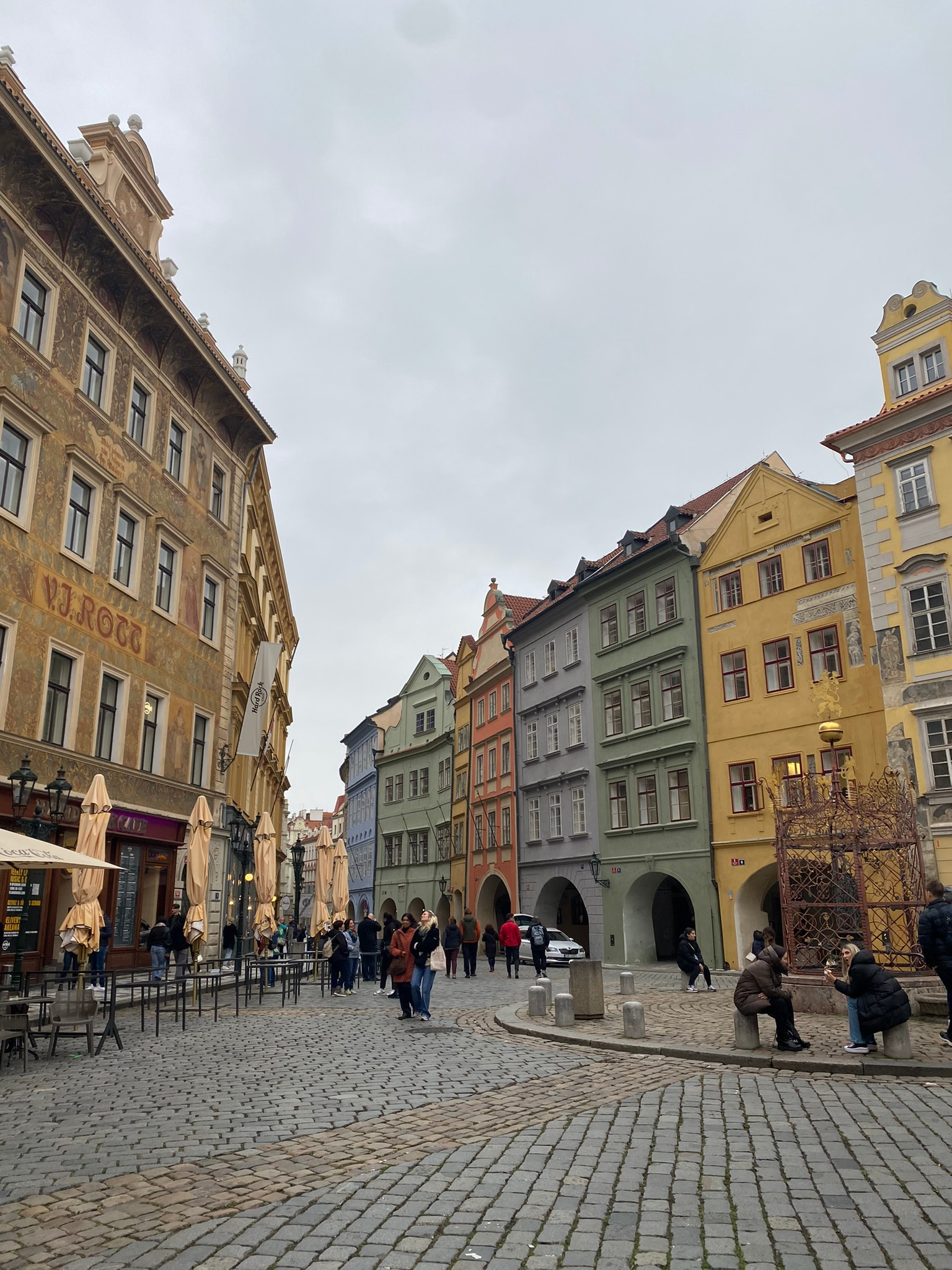
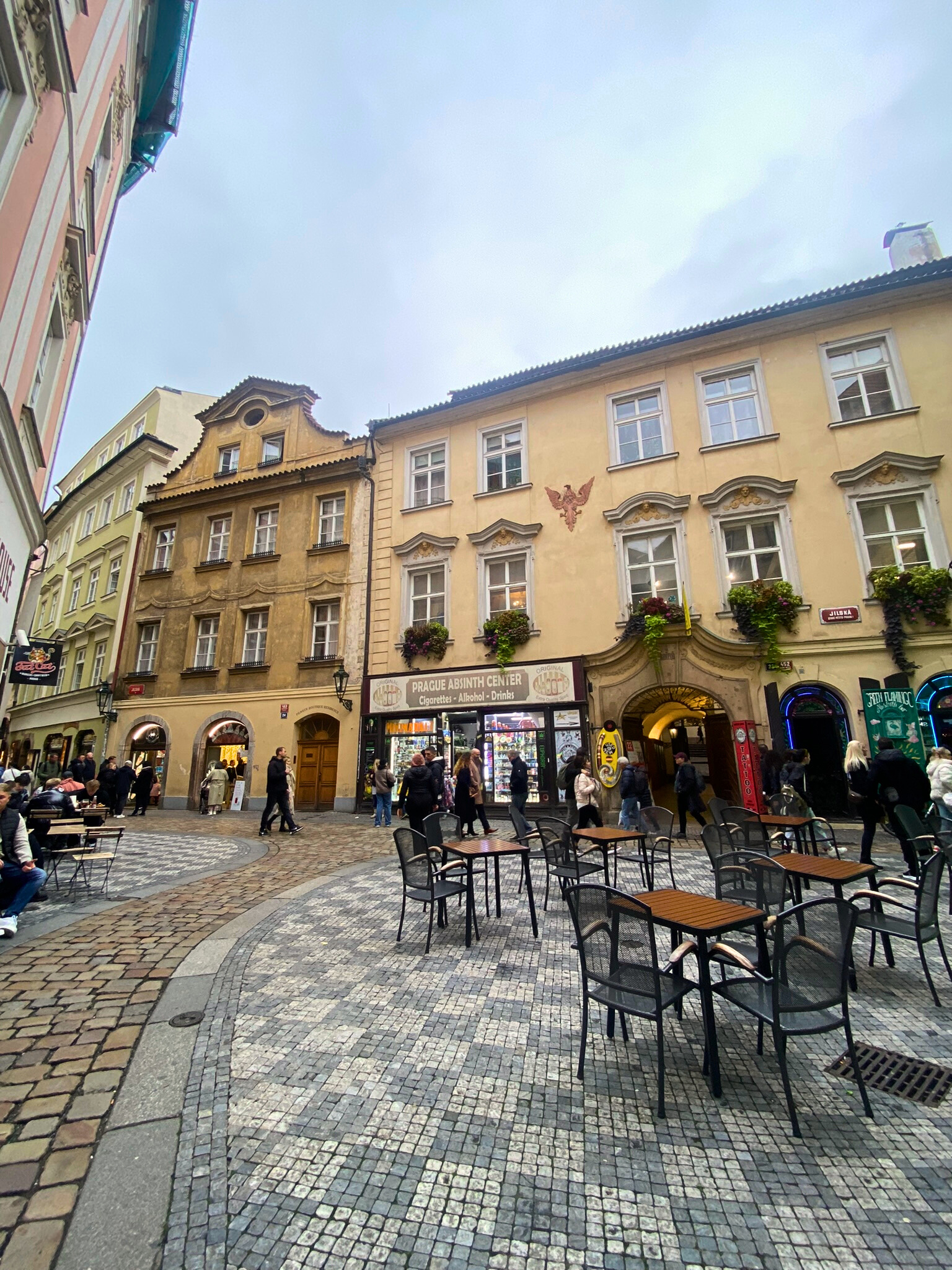
Prague hosts the capital of Czechia — known for the Pilsen brewery and Škoda cars. With a population of about 1.25 million, it is also the country’s most populous city.
When to Visit?
As a Central European country in the north, Czechia is cold by our standards. It has a continental climate ranging from about -5°C in winter to an average of 25°C in summer. So spring, summer, and autumn are lovely. If you love traveling in every season, winter is also worth it for Prague under snow with white rooftops. I think it is especially beautiful at Christmas — one of Europe’s finest Christmas markets is in Prague. But remember that both the summer tourist season and Christmas winter bring extraordinary crowds and higher hotel prices. Prague is a busy city that draws many tourists in almost every season.
How to Get There?
1. By Plane
From Istanbul you can reach Prague Václav Havel Airport in about 2 hours 45 minutes. It is a calm, orderly airport. From Terminal 2 exits you will see municipal buses. Buy 90-minute tickets from the machines and make transfers on a single ticket. Bus 119 from Terminal 2 takes you to Nádraží Veleslavín metro station; from there the metro goes straight to the center. There are also shuttles between the airport and the bus terminal. You can reserve a ride with the Bolt app or use taxis at the airport exit.
2. By Train
Thanks to its geography, Prague is reachable by train from many European cities. There are services from Vienna, Budapest, Dresden, Bratislava, Berlin, Kraków, and more. Prague’s main station is very close to the center, with easy tram and metro links.
Currency
Although Czechia joined the European Union in 2004, it uses the Czech koruna (CZK). So bring euros and exchange them at the airport or at exchange offices in the center. We had heard of scams at some offices, so for a trustworthy exchange we recommend the office marked purple 2 on the map.
Do You Need a Visa for Czechia?
Unfortunately yes — because it is in the Schengen area, you need either a previously issued Schengen visa or a visa from the Czech consulate.
Where to Stay?
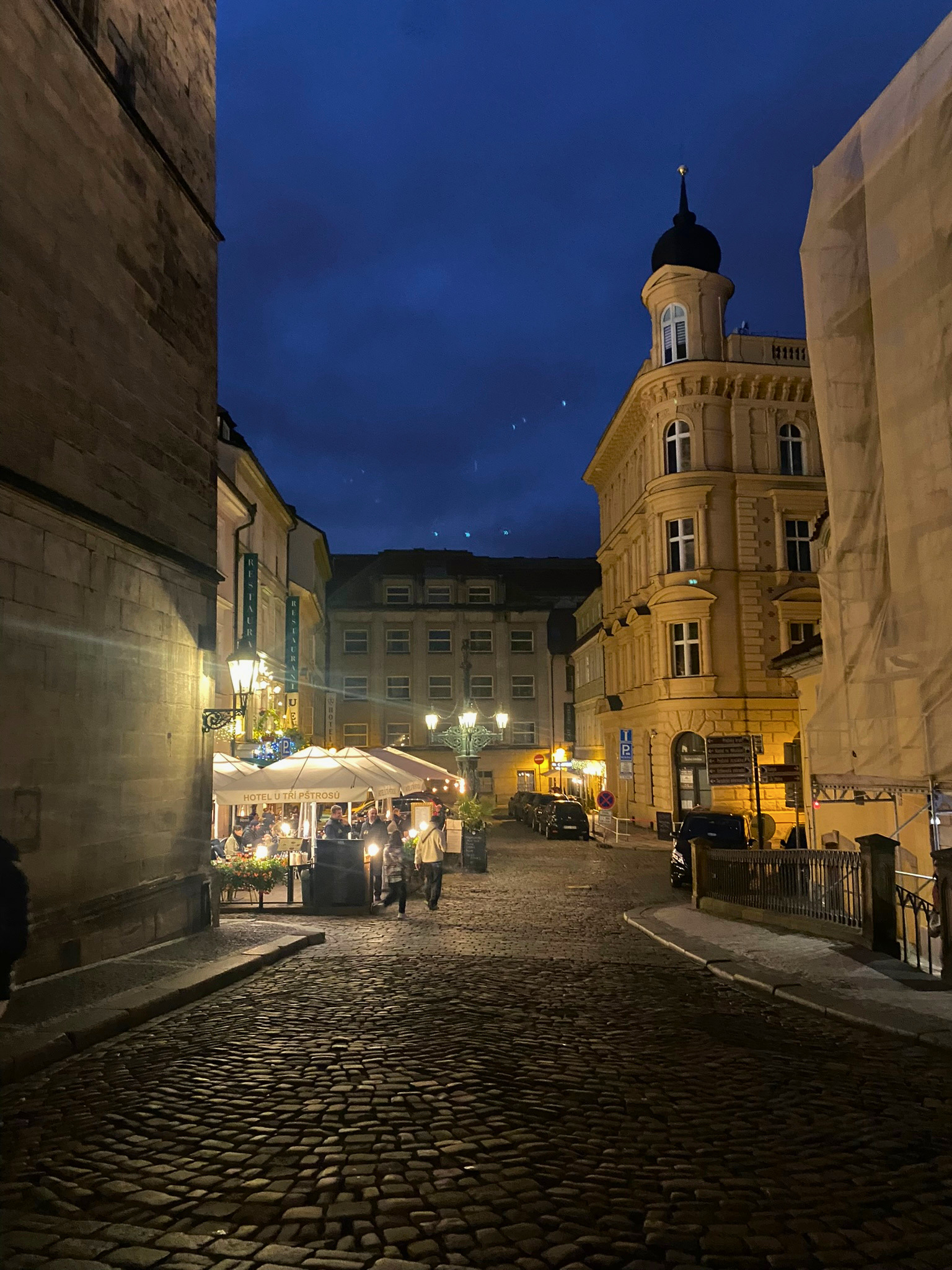
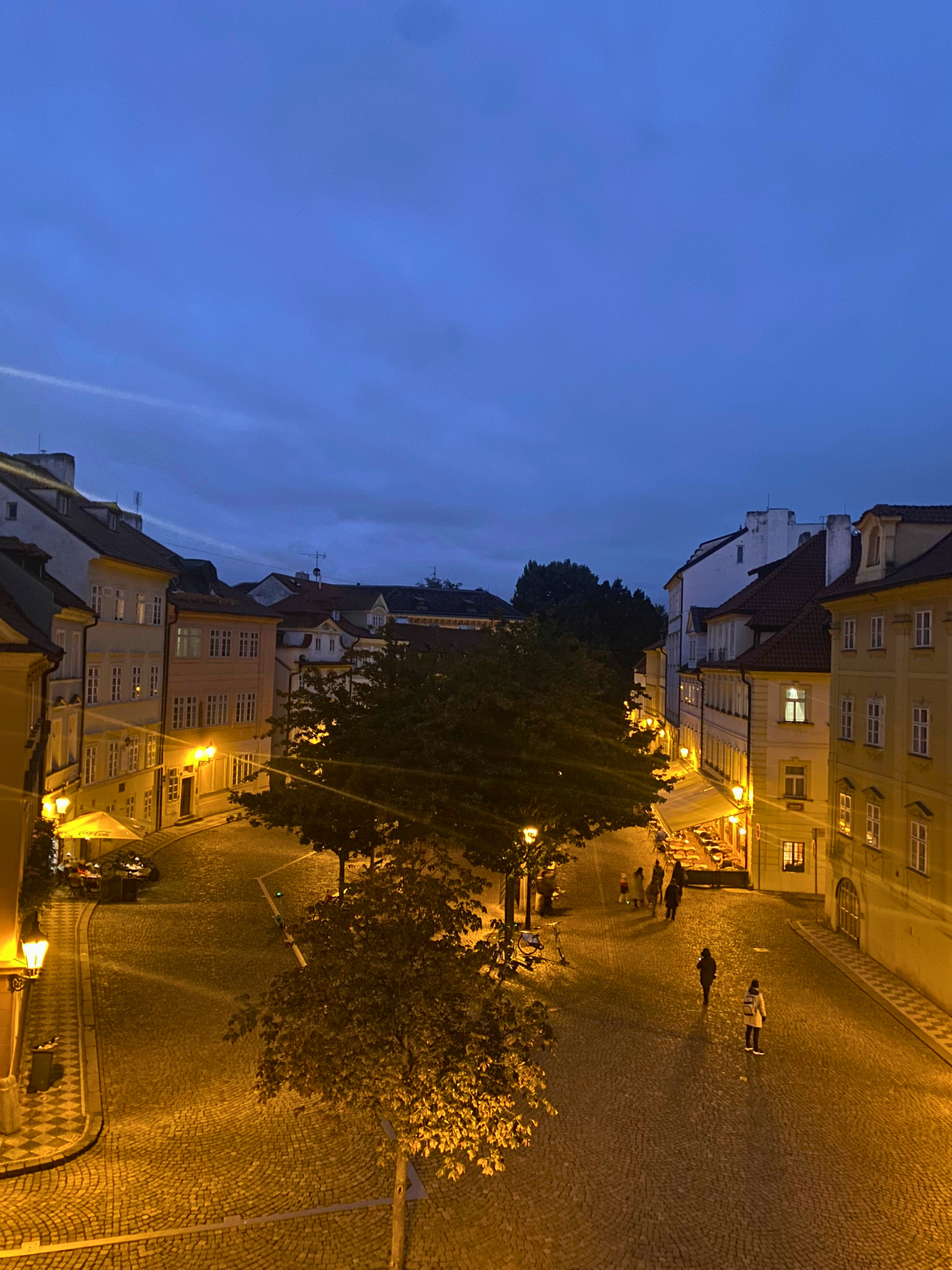
For many tourists the most appealing area is the Old Town (Staré Město), near the Old Town Square. Looking at hotels there, though, you will find many that are small, inadequate, and expensive. Being central, it can be crowded and noisy late into the night. Across the river, Malá Strana sits outside the main tourist core. Its calm, refined, and safe feel is why we chose it. By tram and metro we reached Old Town Square in about 10–15 minutes — basically two stops and one bridge.
How Many Days for Prague?
In 2–3 days you can see many places and get a sense of Prague. If you want a relaxed pace without rushing, and to see nearby spots too, 4–5 days is enough.
Do You Need a Rental Car? How Does Transport Work?
If you will stay in and around the city center, I do not think you need one. Public transport is well developed. If you want to explore nearby places, renting can help. For those with time, trains and FlixBus intercity buses are widely available.
For city transport you can buy 30-minute, 90-minute, 24-hour, and 72-hour tickets from machines in metro stations. Transfers within that time do not need a new ticket. 2024 prices were 30, 40, 120, and 330 CZK respectively. Choose based on how often you will ride in a day. After buying, you must validate the ticket — the clock does not start at purchase. You activate it in the yellow validators on buses or trams. You can also buy tickets via Czechia’s national public transport system PID online or through the PID Litacka app after registering. There is also the Prague Visitor Pass, covering selected museums and unlimited transport for 2 or 3 days at one price. Calculate which museums, activities, and rides you will use — for our program it was not worthwhile.
Important Notes Before You Go
- Make sure you have a data package that works abroad. Google Maps will show how to get places, including arrival times and crowding.
- Winters are harsh because of the geography. Come prepared if you plan a winter trip.
- Validate city tickets in the yellow boxes — otherwise there are fines if you are caught.
- Prague has many tourist activities: guided tours, Czech culture nights, medieval nights, ghosts and legends tours, Cold War nuclear bunker tours, and more. Worth checking before you come.
Places to Visit
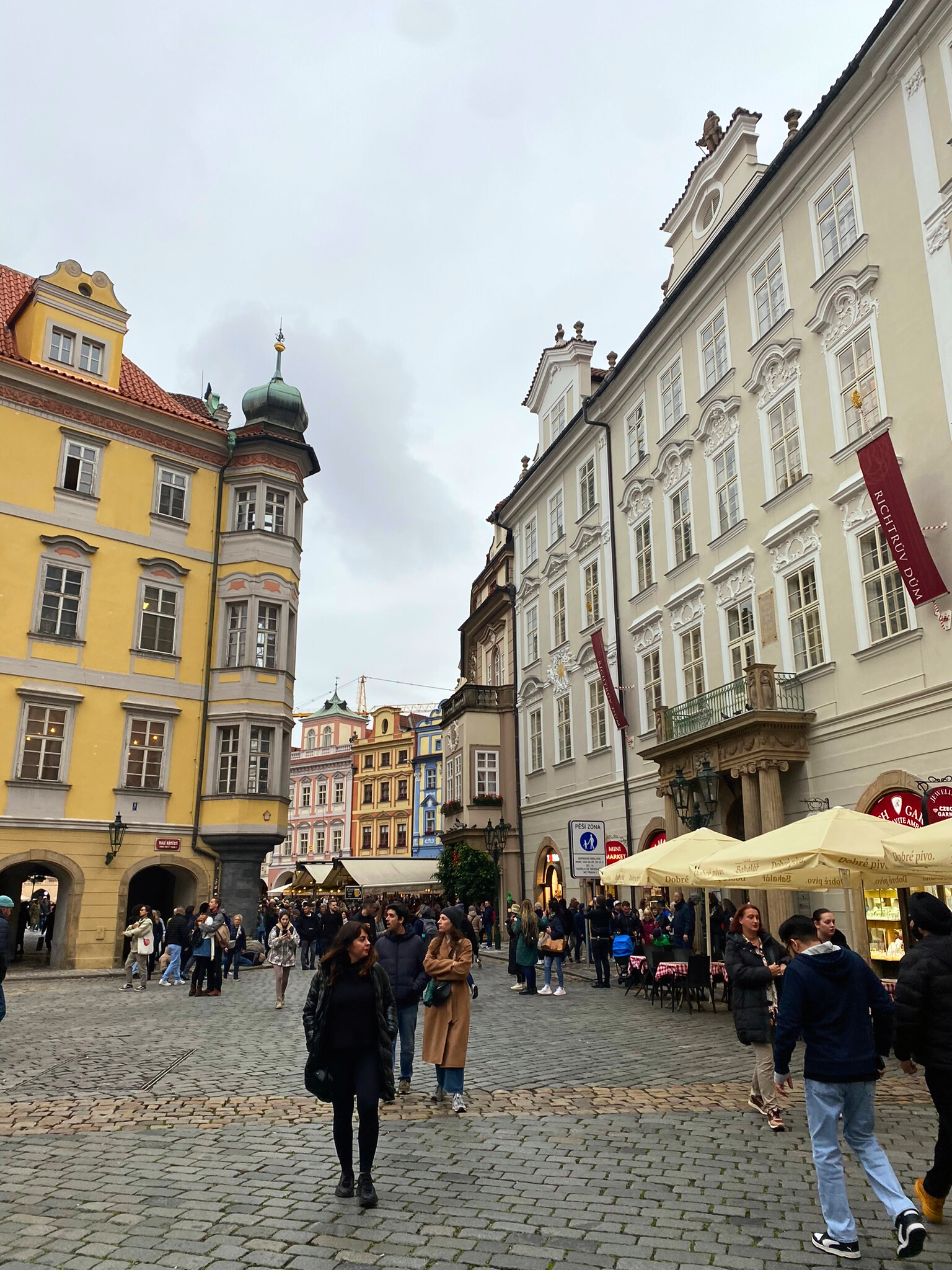
1. Old Town Square
The square that holds the Astronomical Clock Tower, one of Prague’s must-sees. The city’s most central and crowded point. Many historic buildings around it deepen its historical richness. The square dates back to the 11th century. Map location purple 3.
2. Astronomical Clock Tower
Fair to call it Old Town Square’s most iconic structure. Construction began in 1410 on the south face of the town hall. Along with the time, it shows the positions of the sun and moon, moon phases, zodiac signs, and the old Bohemian time system. Legend says the maker Mikuláš was blinded by the king so he would never build another. On the hour a short show runs:
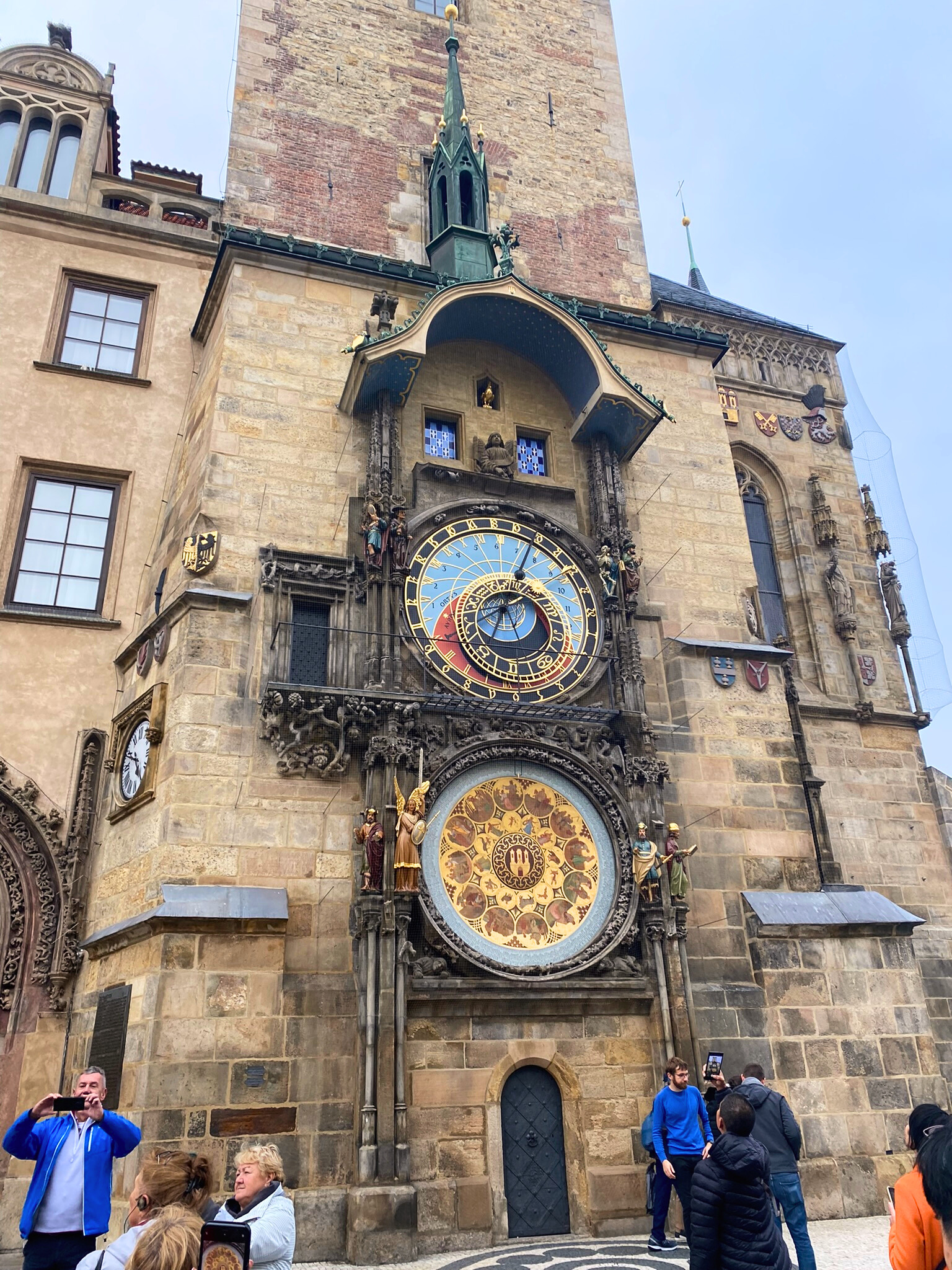
- Procession of the 12 Apostles: representative figures appear in small windows.
- Puppet figures move: Death (skeleton), Greed (a Jew with a money bag), Vanity, Lust, and similar themes.
- At the end a rooster crow rises from the clock and the hour strikes.
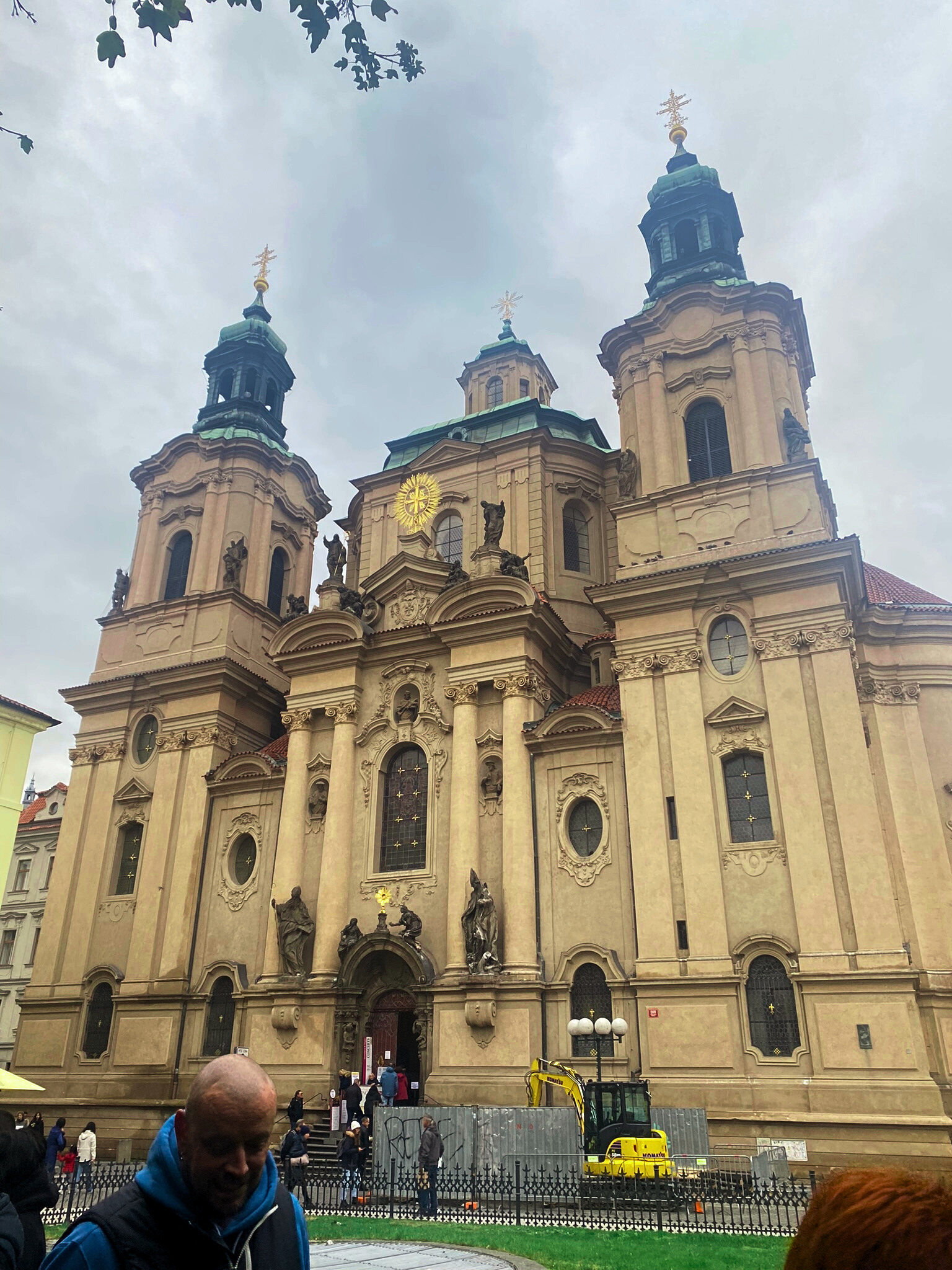
3. St Nicholas Church
A Baroque church built between 1704 and 1755. With its 20-meter-diameter dome and 70-meter bell tower, it is one of Prague’s landmarks. The interior is rich in decoration and frescoes. The large crystal chandelier at the entrance was a gift from Tsar Alexander II in 1880 — about 1.5 tons, shaped like a tsar’s crown, dazzling in scale and elegance. Like many tourist churches today, concerts and events are held here. Tickets can sometimes be bought at the door shortly before. Map location purple 4.
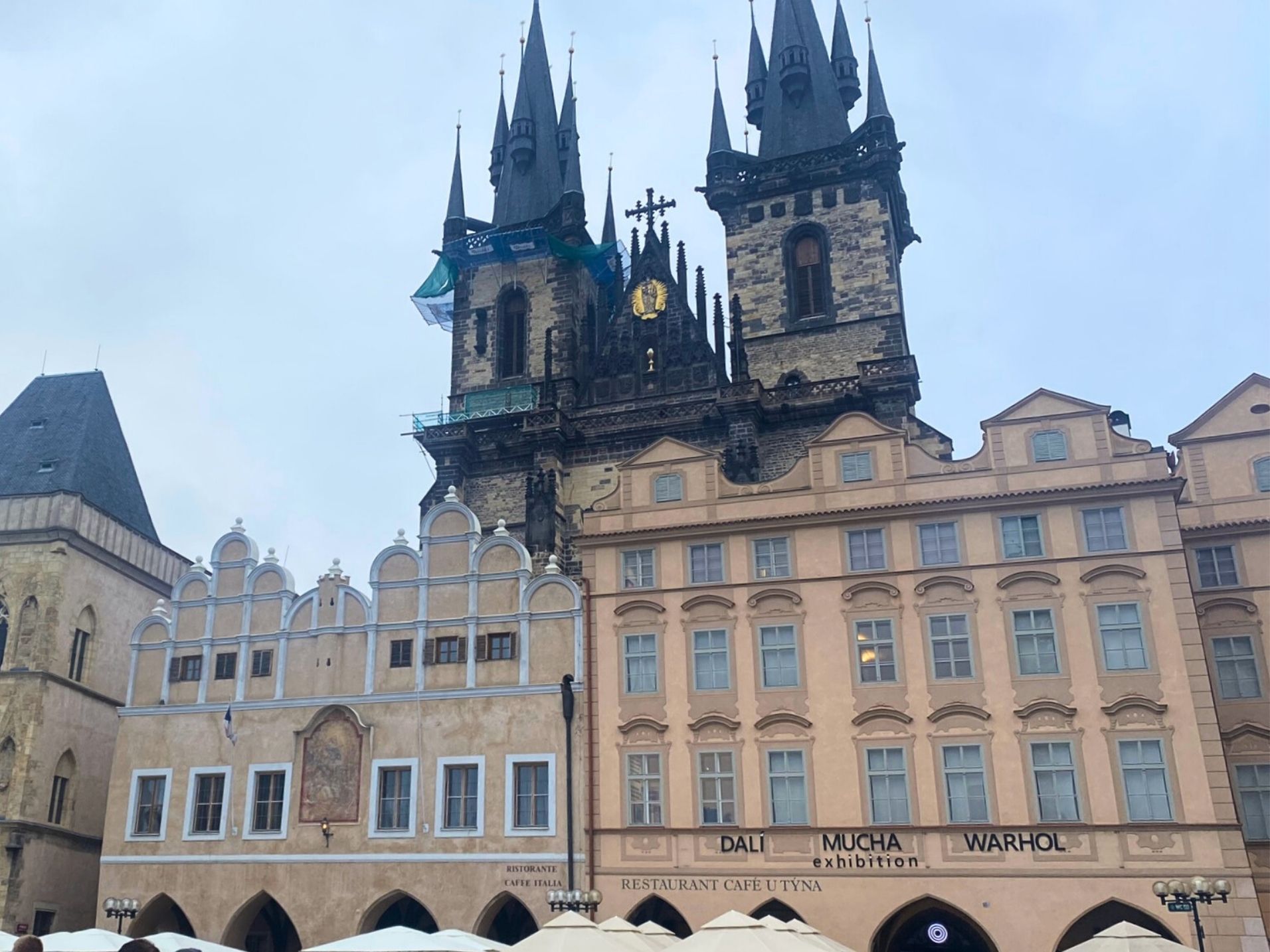
4. Týn Church
One of the most important Gothic cathedrals on Old Town Square; construction began in the 14th century. Famous for its twin towers — and especially because they differ in size. Look carefully and one is thinner, the other thicker. Inside are tombs of important religious figures. Entry is free, though you may wait in line when crowded. Map location purple 8.
5. Jan Hus Memorial
In the middle of Old Town Square stands the statue of Jan Hus, an important figure for Czechs. A theologian, Hus was excommunicated by church authorities for his enlightened ideas and burned at the stake. Five hundred years after his death he was declared a national hero and this statue was made. Map location purple 5.
6. Charles Bridge
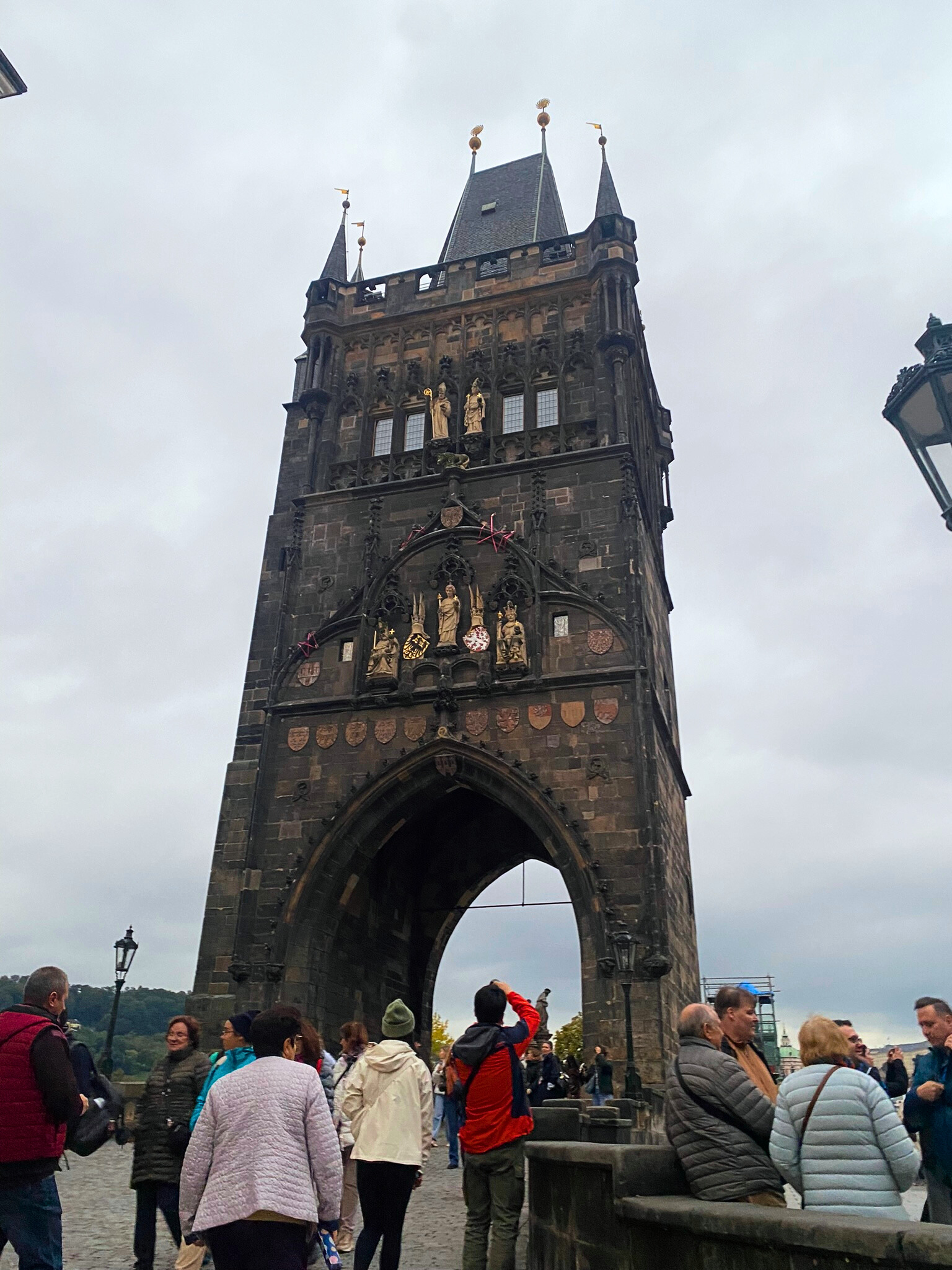
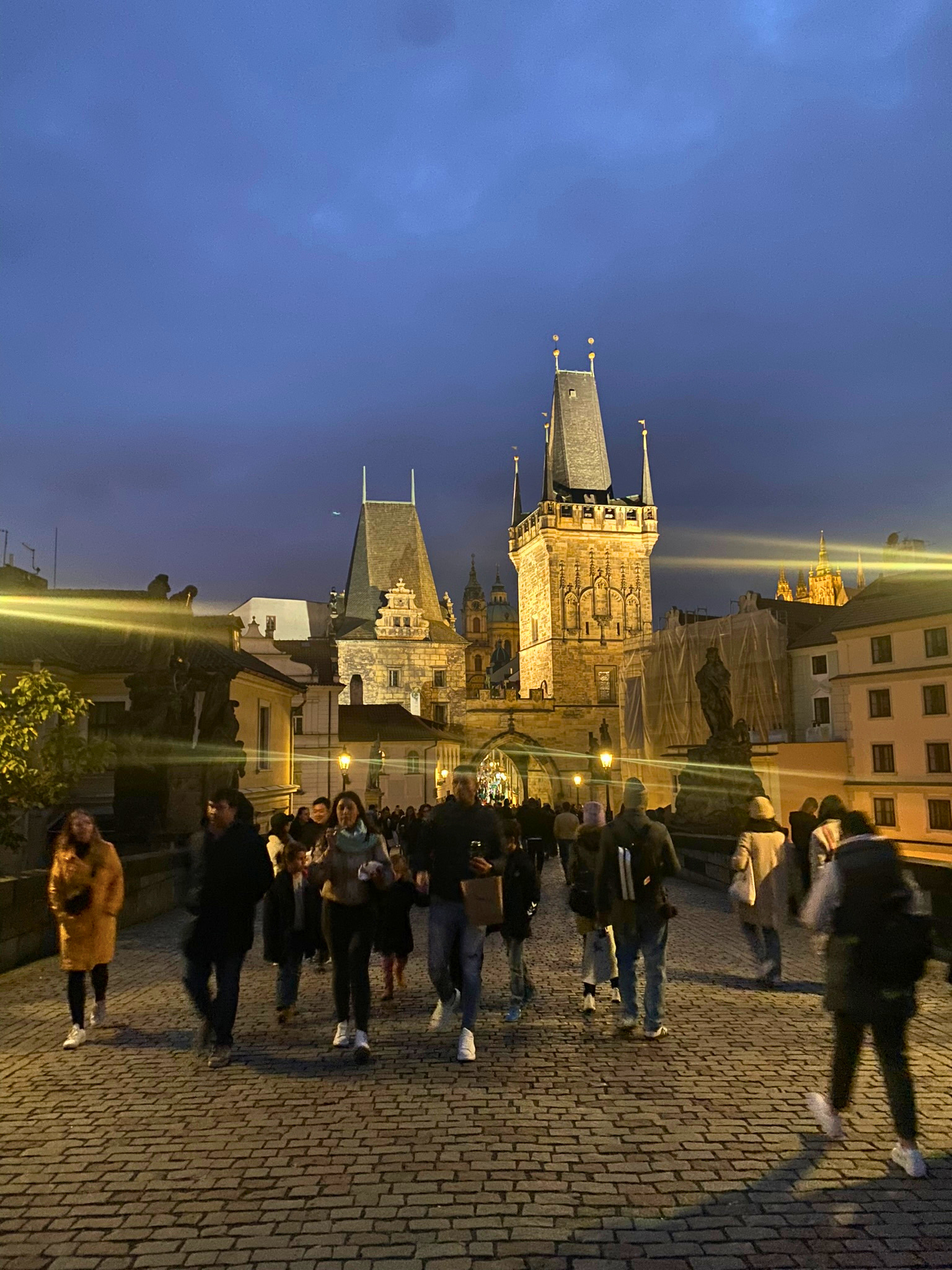
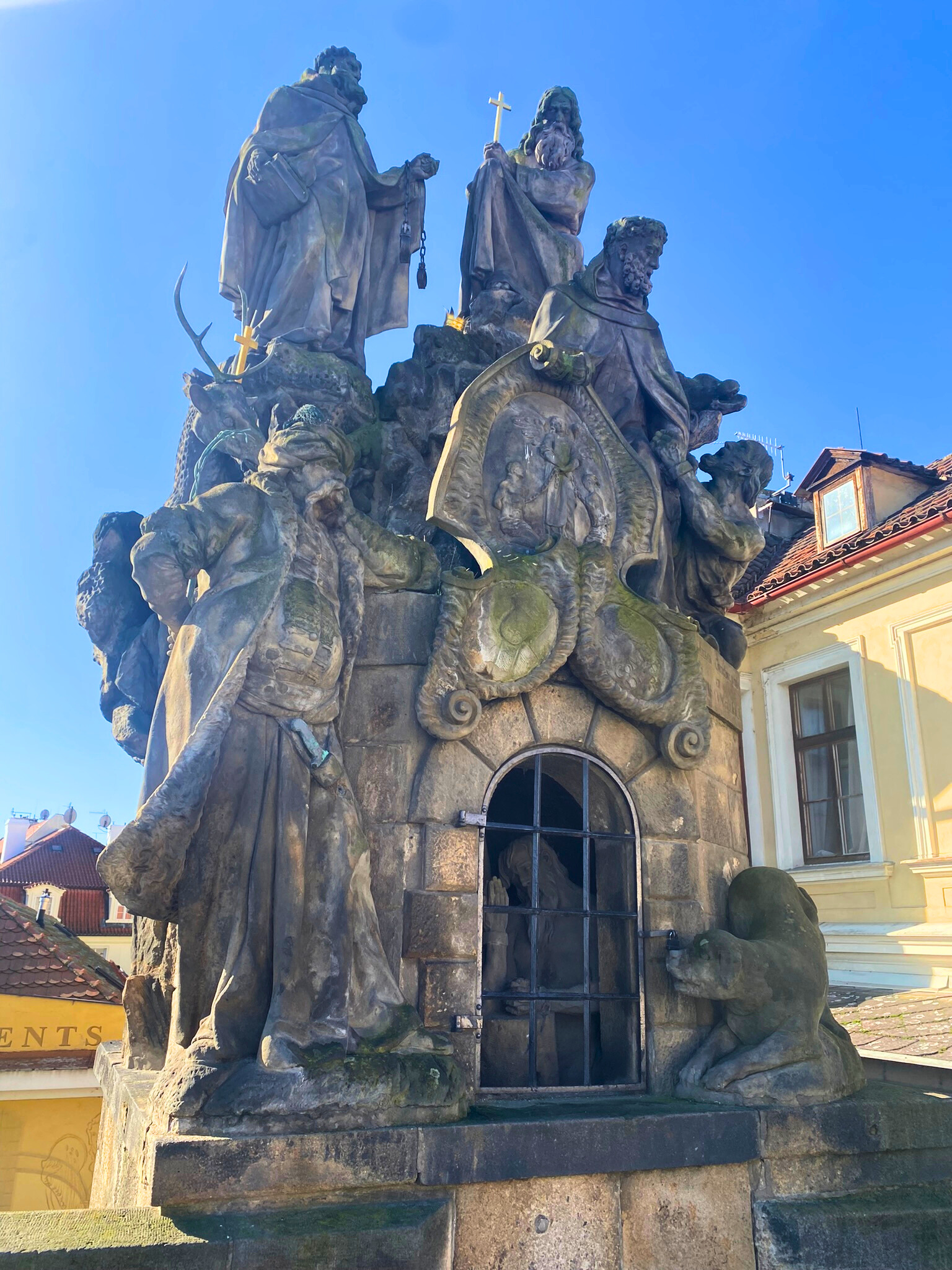
One of Prague’s most important symbols. 516 m long and 9.5 m wide, it is entirely pedestrian, with towers at both ends. Statues accompany the views of the bridge and the Vltava. They create an open-air gallery feel and many have stories — but they are replicas; originals are in the National Gallery. One is John of Nepomuk, a priest tortured and thrown from the bridge for not telling King Wenceslaus IV the secrets Queen of Bohemia confessed to him. Legend says if you touch the bronze plaque under the statue, you will return to Prague one day. Another important statue is of St John of Matha, St Felix of Valois, and St Ivan — made as propaganda. On the base, an Ottoman soldier stands over three chained Christian captives praying for freedom, a sword at his belt. The message to Christians: if you do not stand united and strong, you will become Ottoman captives — showing how serious a fear and threat the Ottomans were then.
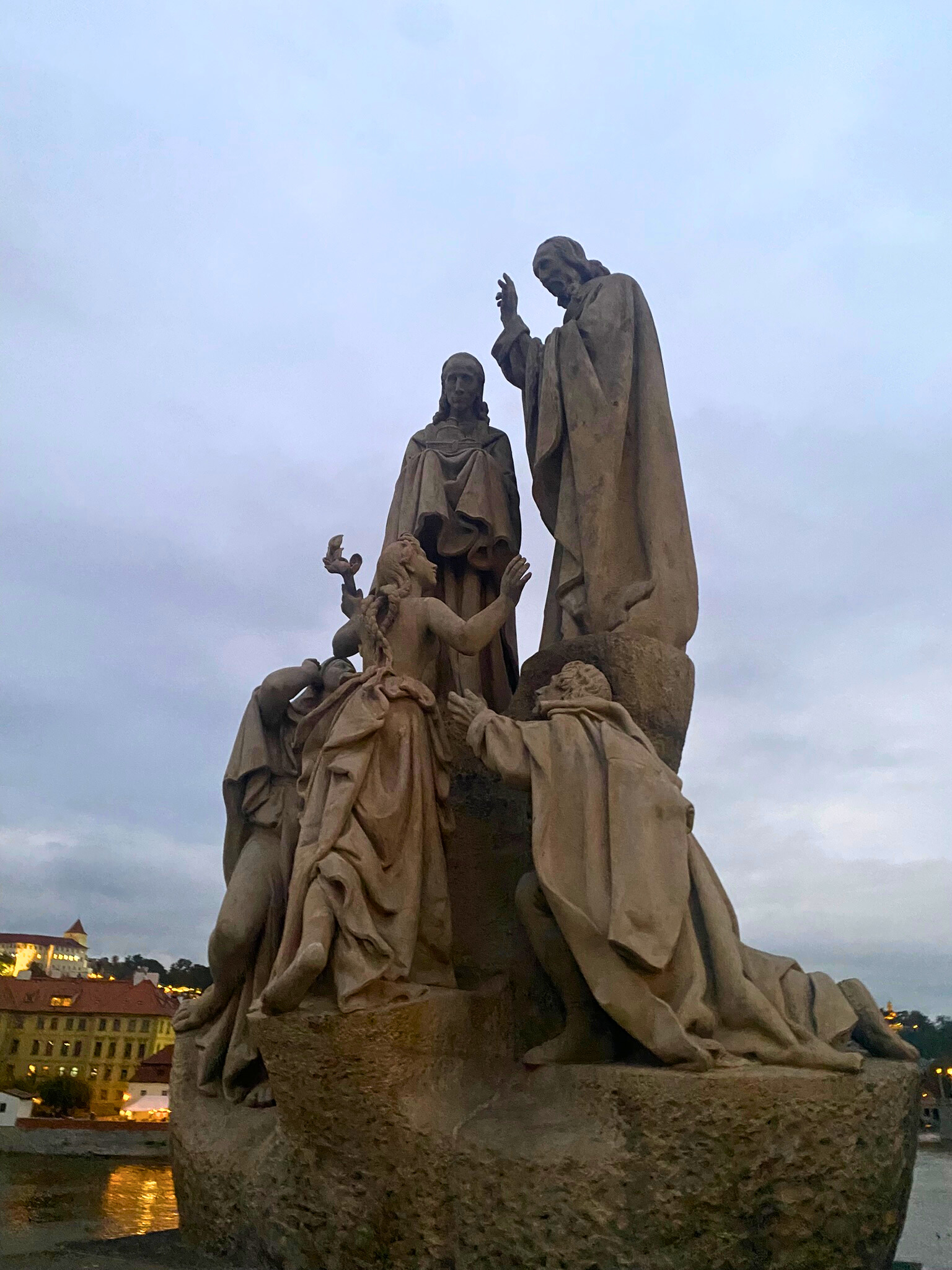
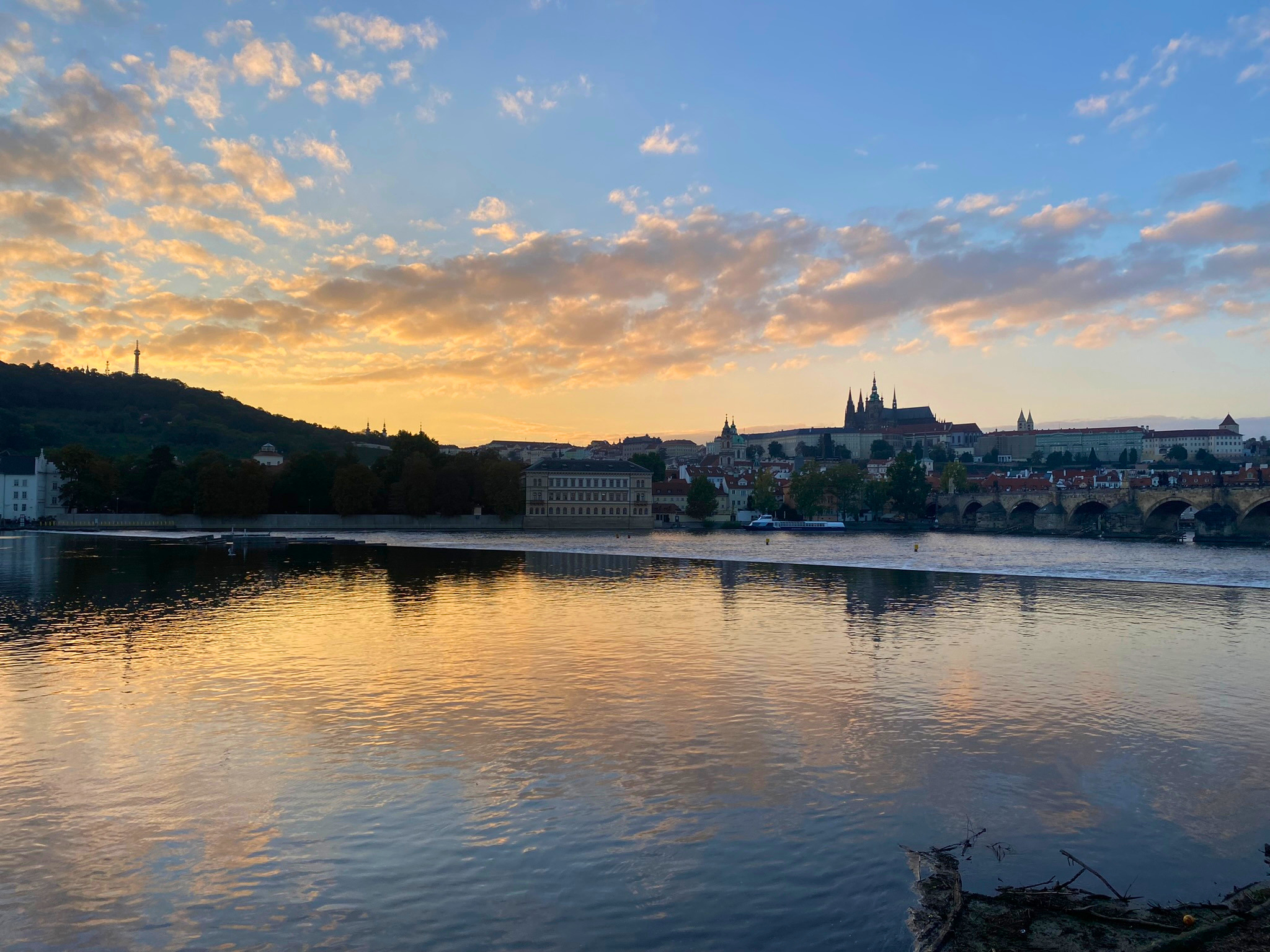
The bridge’s lighting is still lit in the old way with gas lamps by a lamplighter. Listening to street musicians while soaking in the atmosphere is highly recommended. Come at sunset and again in the evening to feel the Middle Ages in your bones. Map location purple 12.
7. Powder Tower
This is how you enter Old Town Square. Still largely original, it was used to store gunpowder in the 17th century — hence the name. Height 44 meters. When we visited it was under renovation with scaffolding, so we could not see the façade. Climbing the tower costs an entry fee. Map location purple 9.
8. Man Hanging Out
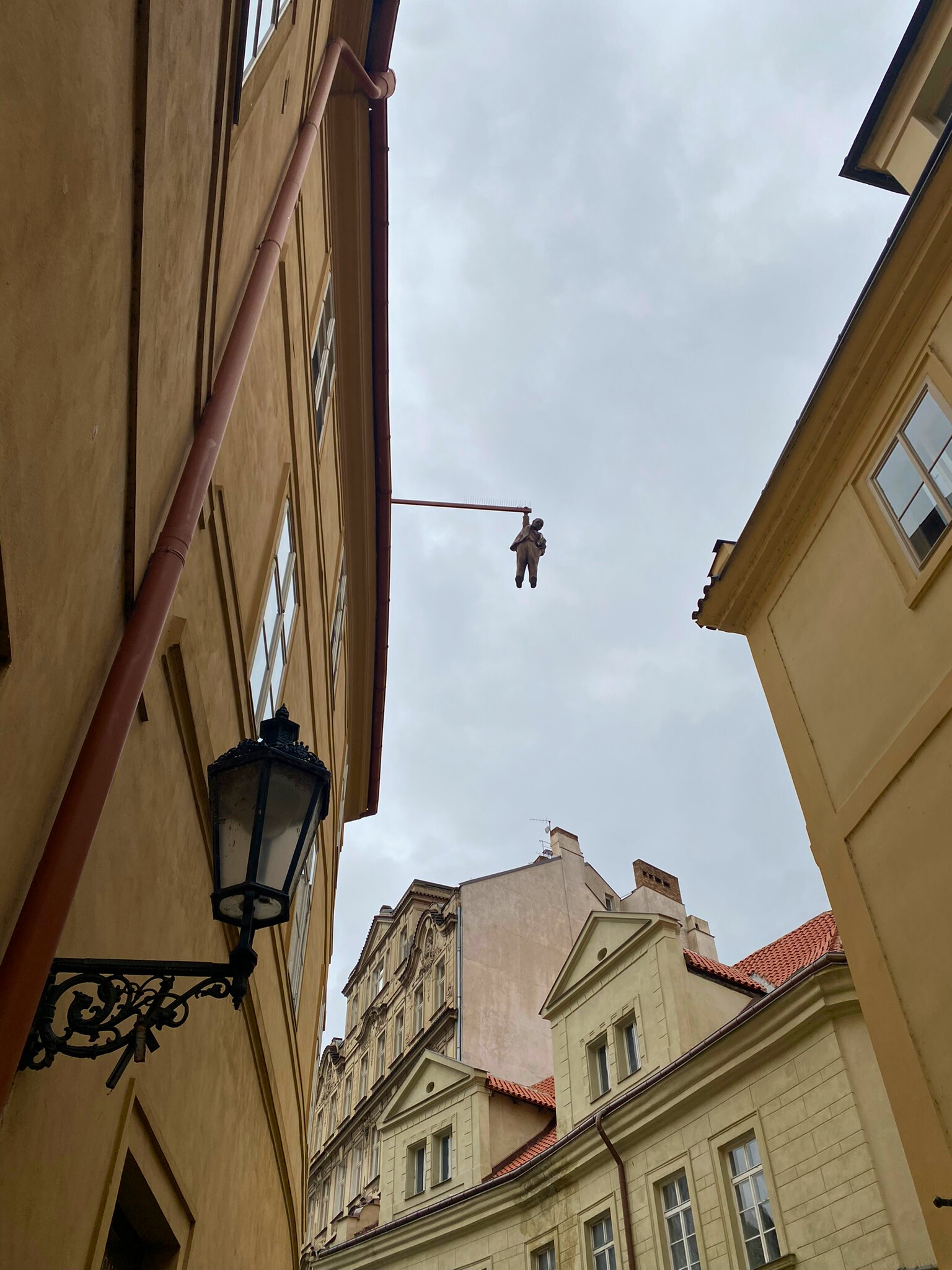
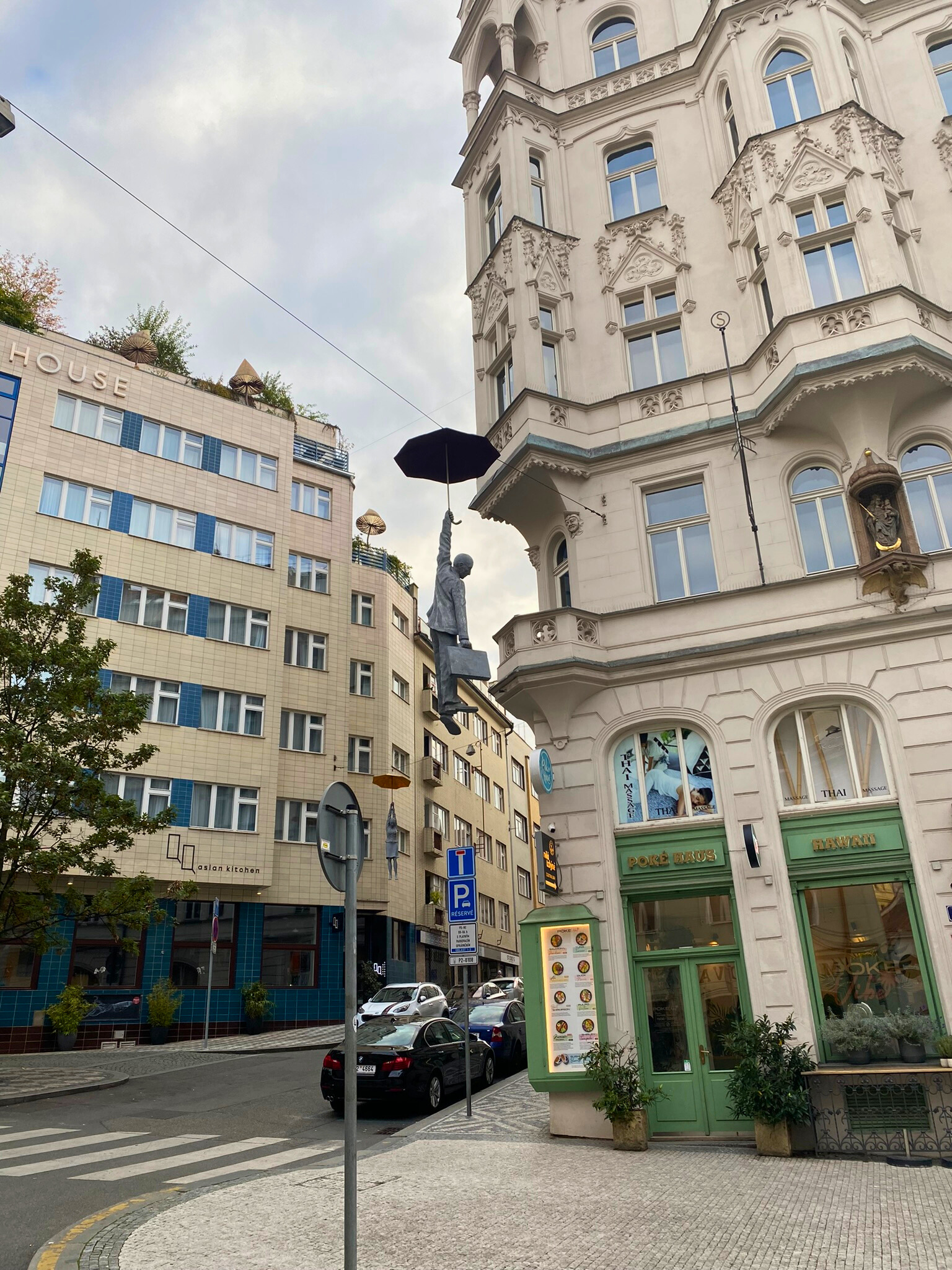
As you wander streets that feel like an open-air museum, you see many sculptures — especially by Czech artist David Černý. One of Prague’s signature pieces is Man Hanging Out: Sigmund Freud hanging thoughtfully by one hand. Worth seeing. Map location purple 14.
9. Na Příkopě Street
The famous shopping street that begins by the Powder Tower. Many well-known luxury brands. Lovely for shoppers. Map location purple 11.
10. Paris Street (Pařížská)
One of the city’s oldest streets. Luxury brand stores and architecture make walking a pleasure even if you do not shop. Map location purple 15.
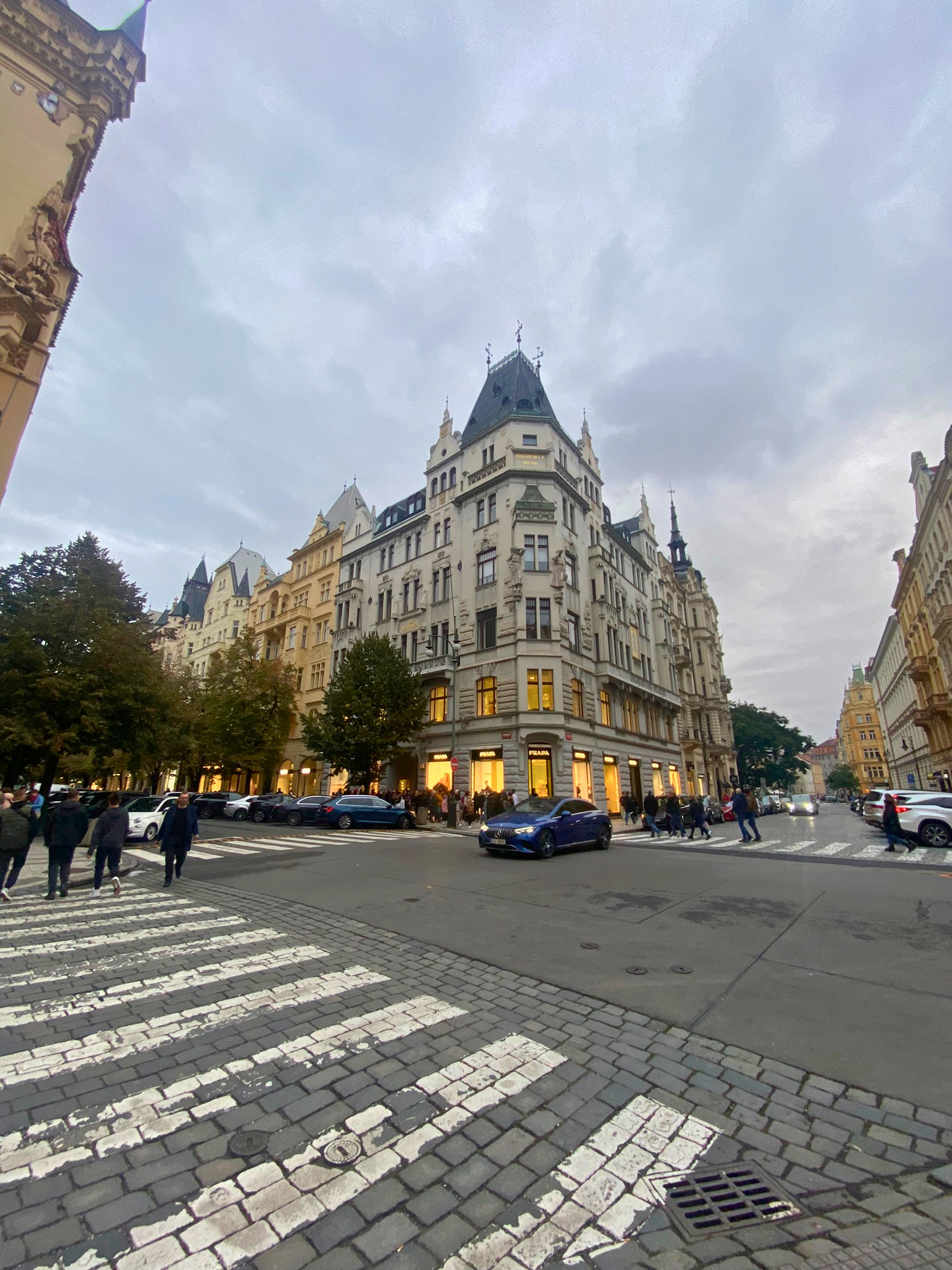
11. Jewish Quarter / Josefov
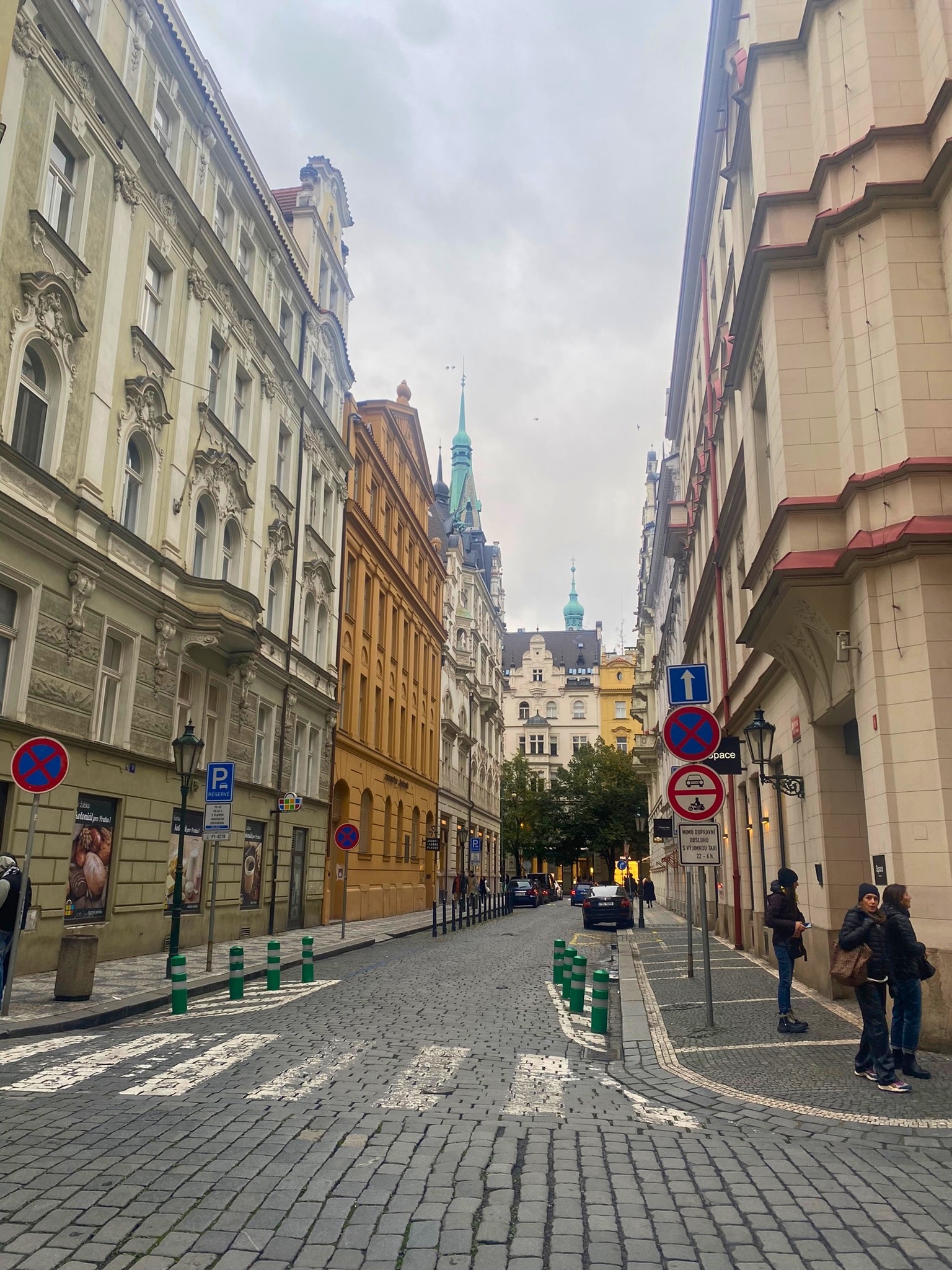
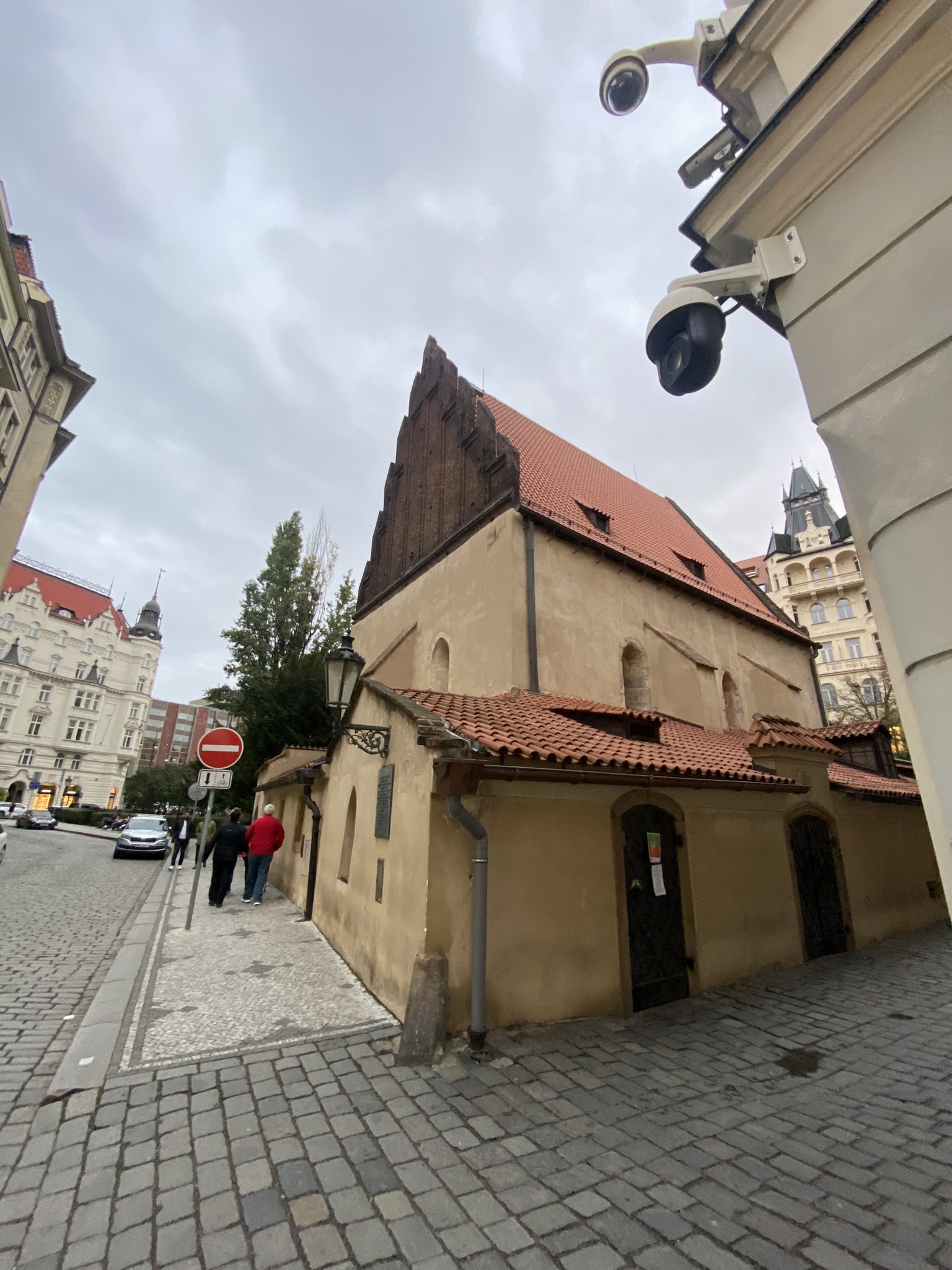
Created in the 13th century when Jews were excluded and forced into a ghetto. Later named Josefov in honor of Emperor Joseph II. At the end of the 1890s it was demolished and rebuilt in Art Nouveau style; synagogues and cemeteries were preserved. One of Europe’s best-preserved Jewish quarters. You can walk and absorb the atmosphere, but synagogue entry is paid. Active synagogues are closed on Saturdays. You can buy a ticket covering all synagogues or join guided quarter tours for history and Jewish legends. Tickets are available from the Prague Jewish Museum and GetYourGuide. Synagogues to see include:
A. Old-New Synagogue
Europe’s oldest synagogue. Built in Gothic style in the 13th century — its age shows from outside. Still actively used. Map location purple 20.
B. Maisel Synagogue
Built in Neo-Gothic style in the 16th century by wealthy banker Mordechai Maisel. Today it serves as part of the Jewish Museum. Map location purple 18.
C. Pinkas Synagogue
The second-oldest synagogue; walls bear the names of 70,000 Czech Jews who died in World War II. Visit it as a museum. Map location purple 21.
D. Klausen Synagogue
Built in Baroque style in the 17th century; used only as a museum today, with pieces reflecting Jewish tradition and belief. Map location purple 22.
E. Spanish Synagogue
We did not have enough time for the interiors and only saw the quarter from outside — but the Spanish Synagogue was the one I most wanted to see. What sets it apart is its 19th-century Moorish style. Still an active synagogue, it also hosts concerts. Map location purple 23.
F. Jewish Cemetery
Used between the 15th and 18th centuries, with more than 12,000 Jewish gravestones. Especially interesting for those who study old stones. Map location purple 19.
12. National Museum (Národní Muzeum)
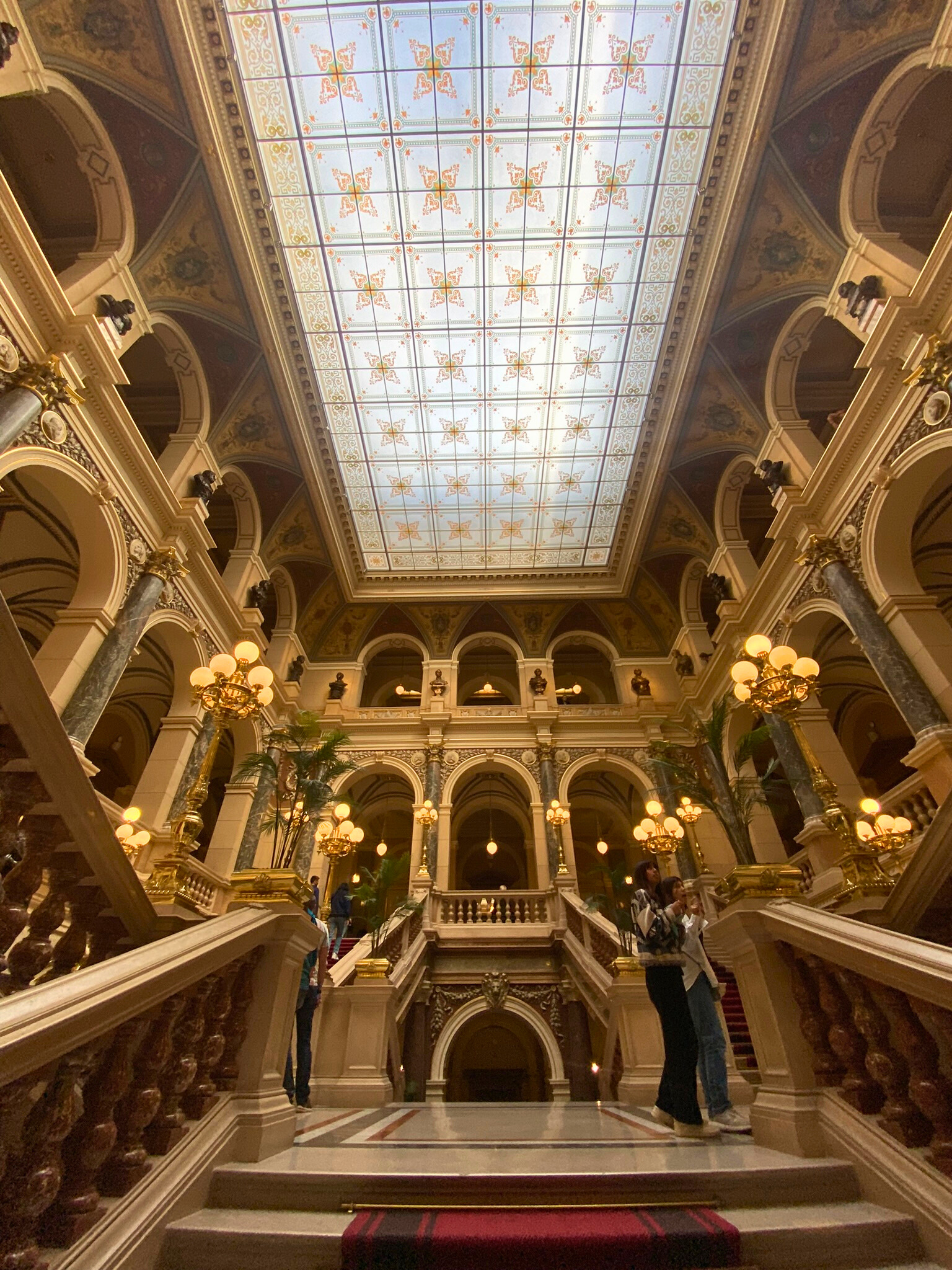
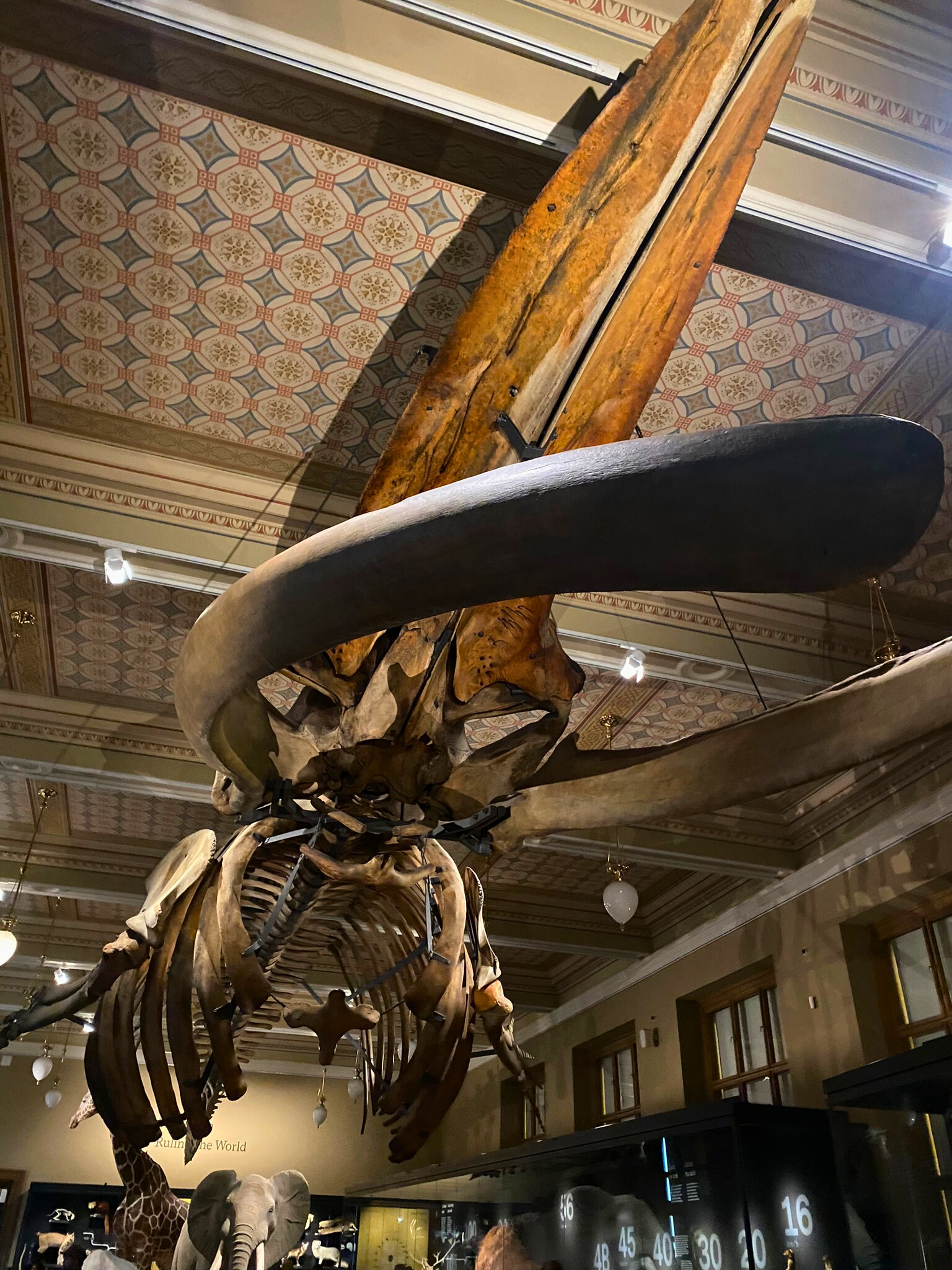
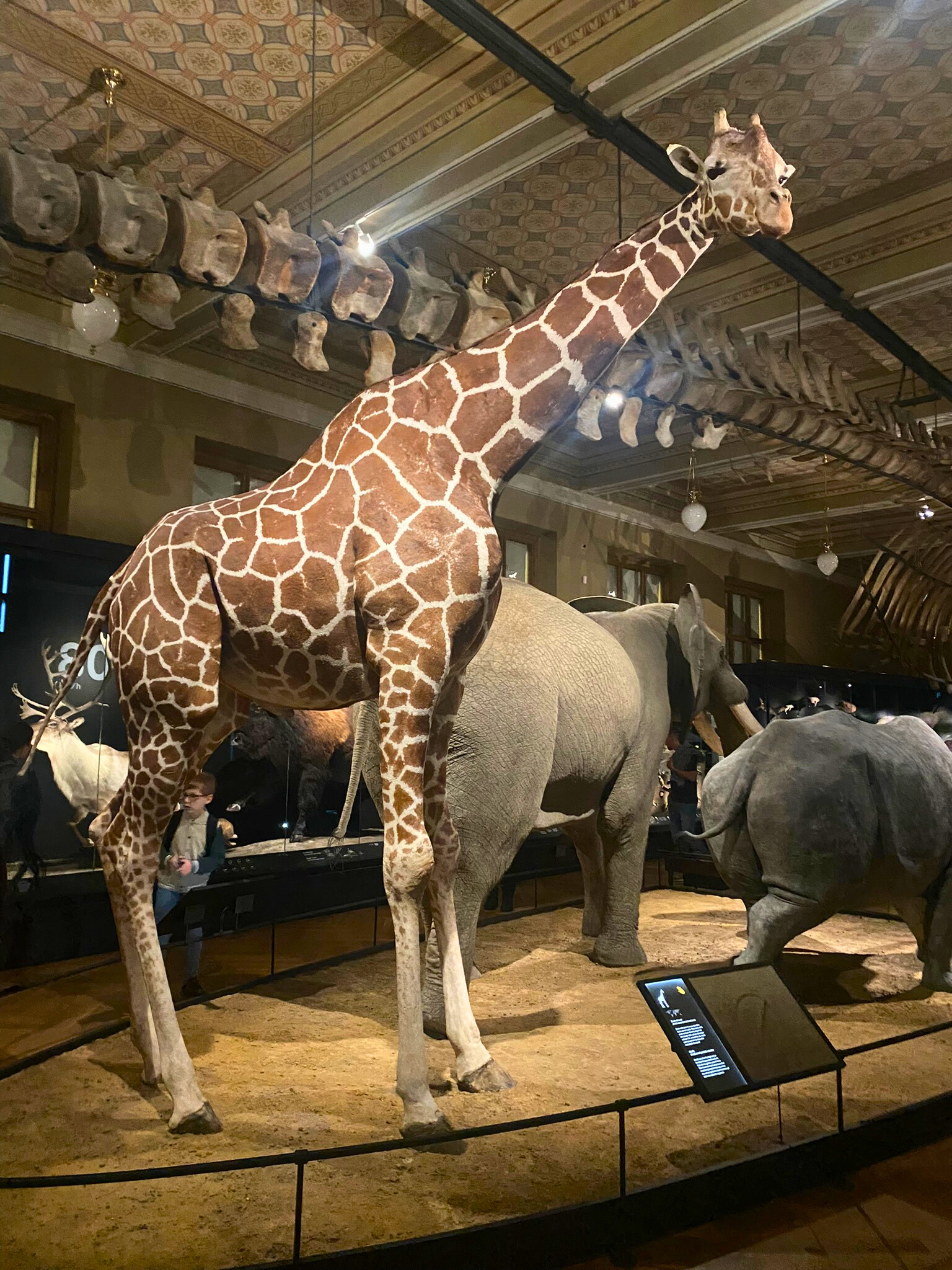
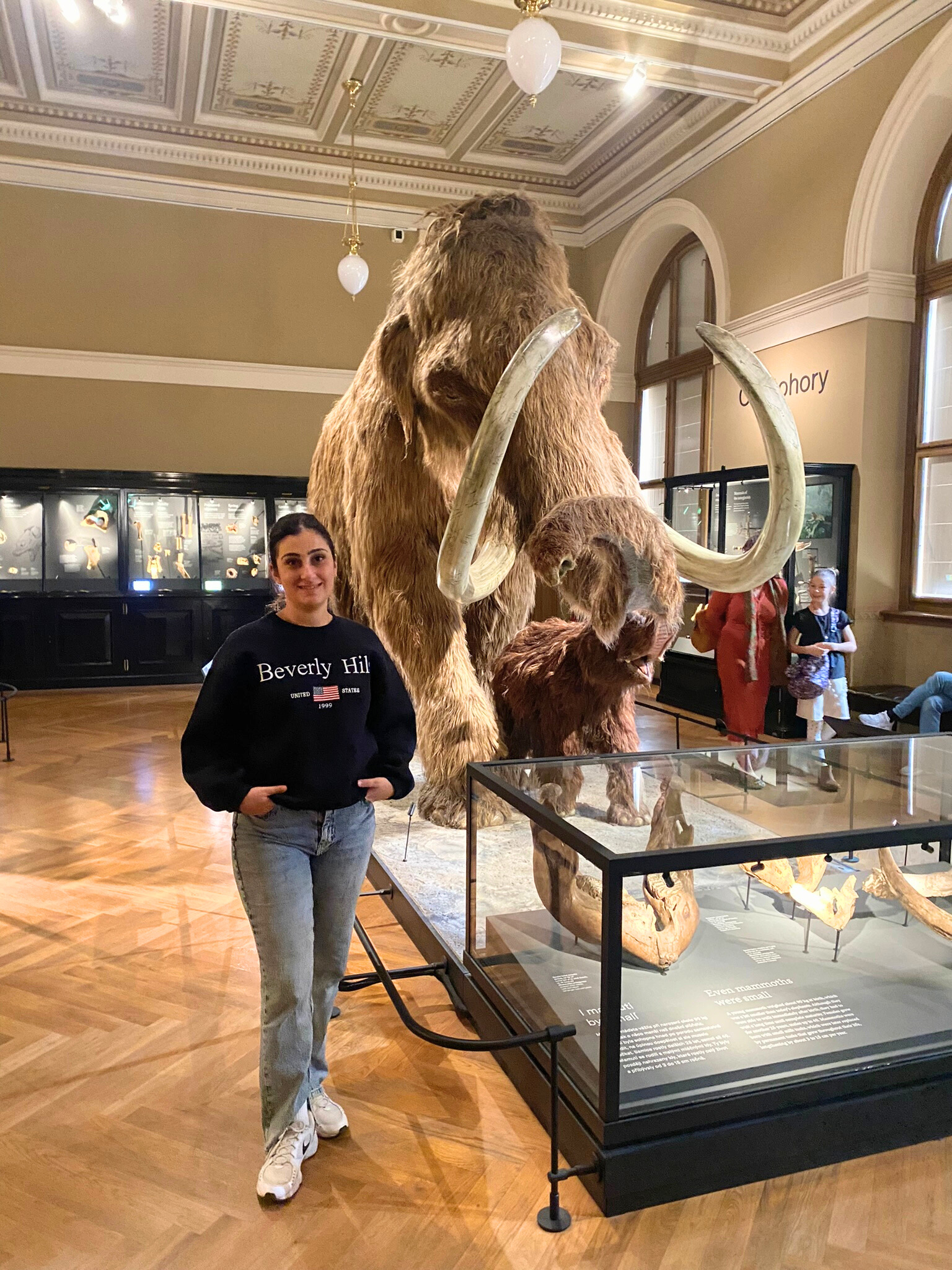
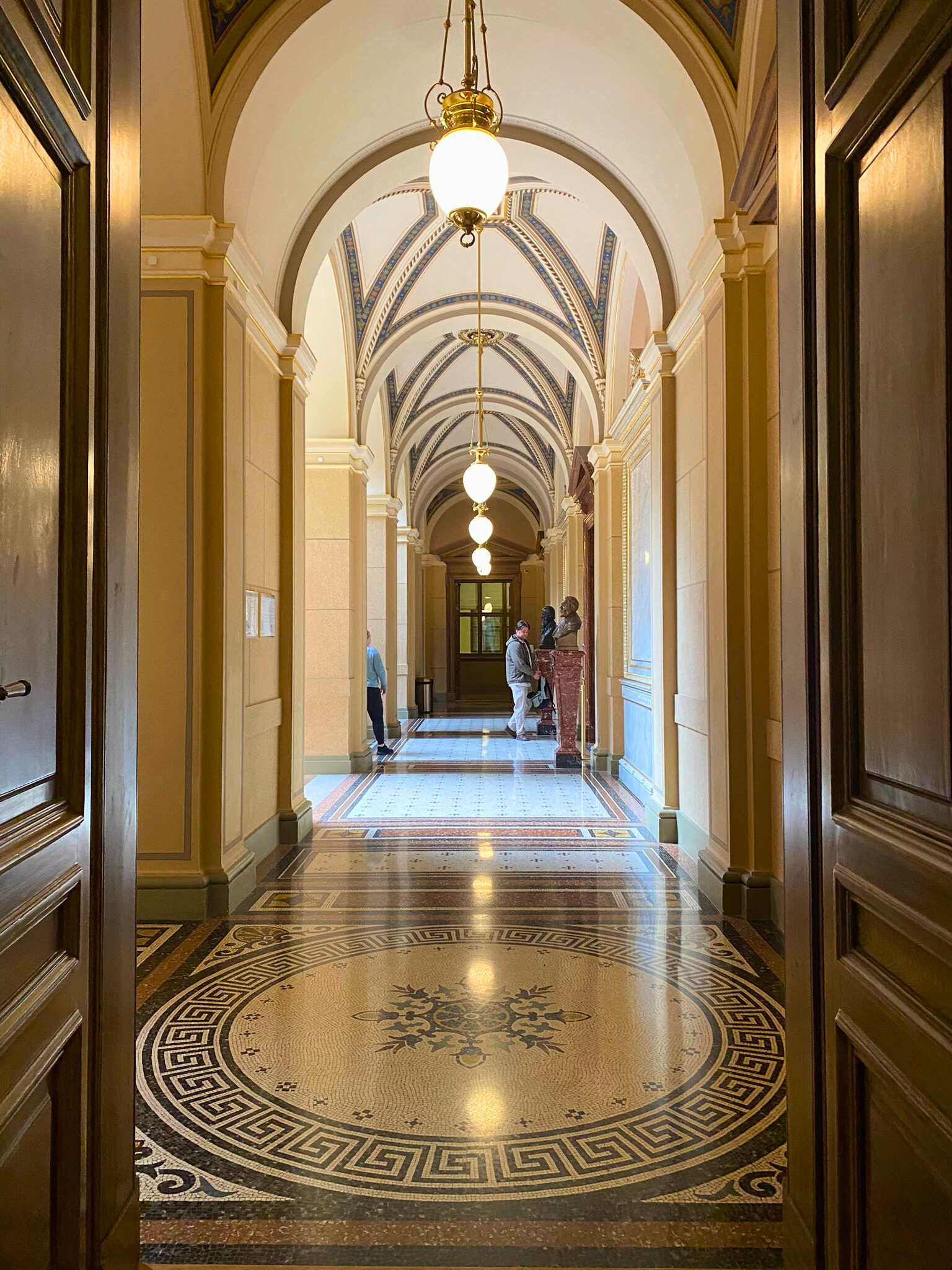
On Wenceslas Square, Prague’s National Museum surprised us with its richness. Natural history, animals, minerals, archaeological finds — a huge range. The most striking piece is a 22.5-meter, 4-ton whale sculpture. Frozen animals, minerals, Czech history, ethnography — all thoughtfully presented. Plan at least half a day. There is a café for resting. The museum has two buildings — one from the 1890s, one modern — and you continue the visit by moving between them. Lockers and a cloakroom are on the lower floor. We bought tickets on the museum’s own website; GetYourGuide also offers combined tickets and guided options. Map location purple 24.
13. Wenceslas Square
One of the city’s famous busy squares, with the National Museum behind it. Many events important to Czechs happen here. At the center is an equestrian statue of King Wenceslas (Saint Václav), one of Czechia’s most important leaders. Map location purple 25.
14. Palace Lucerna
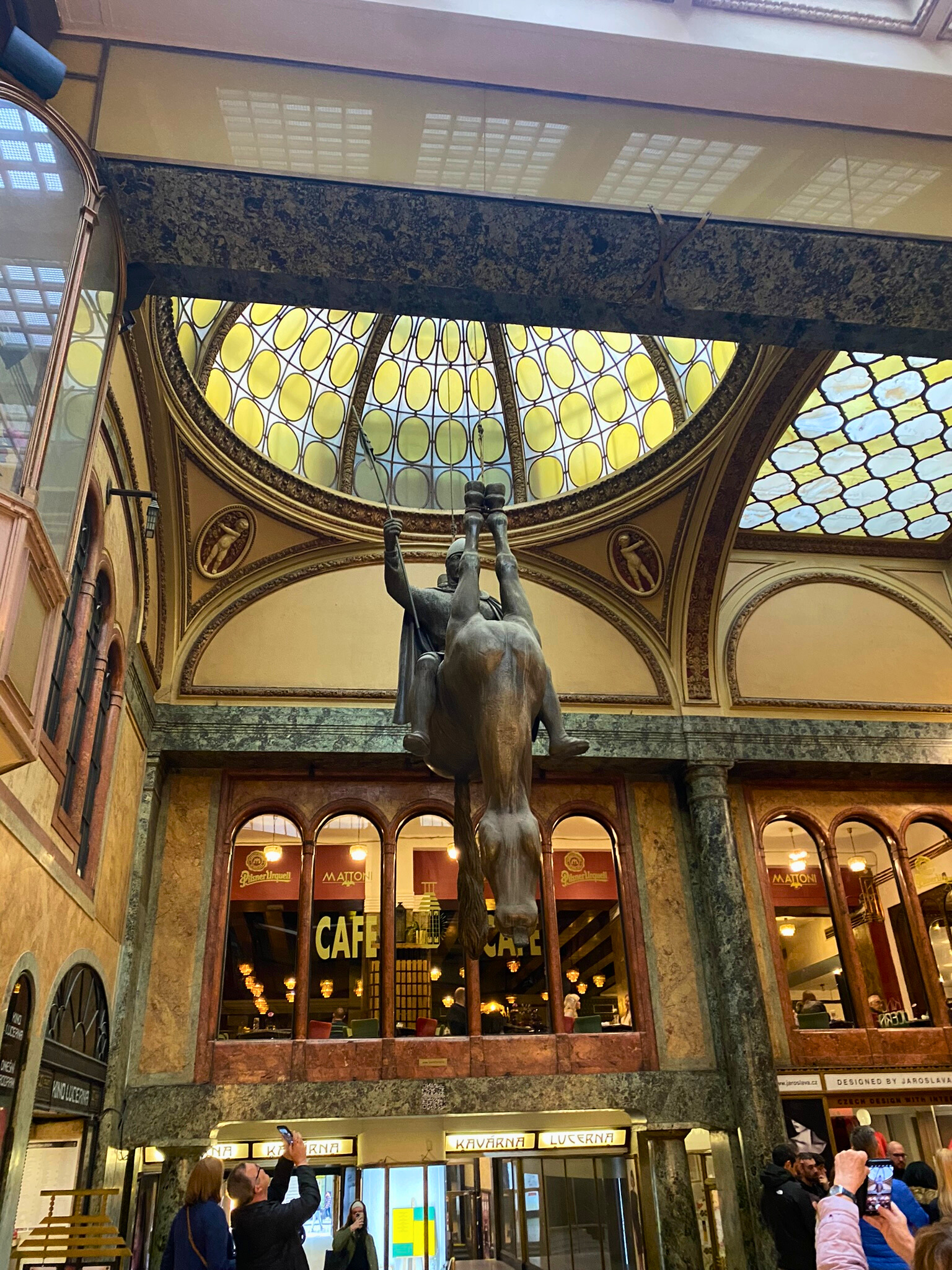
Built 1907–1921 as a social space for the public. It has a music bar, cinema, café, and a pedestrian passage to another street. One distinctive detail is David Černý’s upside-down horse with King Wenceslas seated on it — a dark-humor nod to the statue on Wenceslas Square, hanging from the dome at the main entrance. Another rarity is the paternoster elevators, whose construction was largely stopped in the 1970s: open, doorless cabins that circulate continuously — you hop on and hop off at your floor. Map location purple 26.
15. Moving Franz Kafka Statue
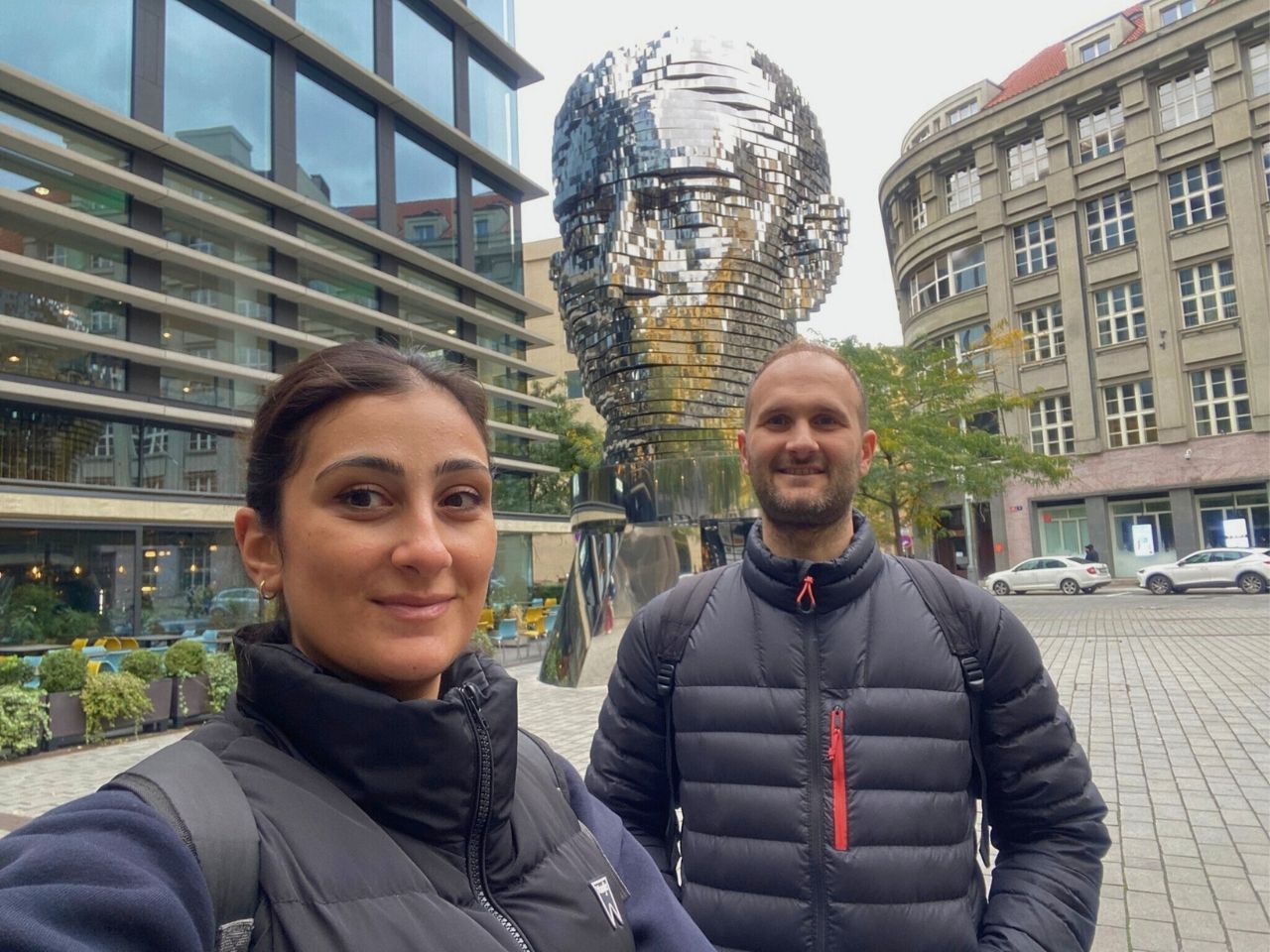
Another David Černý work: a rotating Franz Kafka made of linked horizontal metal layers, 11 meters high. Every 15 minutes the layers move for an enjoyable show. Map location purple 27.
16. Národní Street
One of Prague’s busiest streets, with a mall, shops, brands, restaurants, and cafés. Walk end to end and join the crowd. Map location purple 28.
17. Hanging Umbrella Man
Prague fills its streets with art. Michal Trpák’s Hanging Umbrella Man is quite humorous — and again, it is Sigmund Freud. 🙂 Map location purple 29.
18. Dancing House
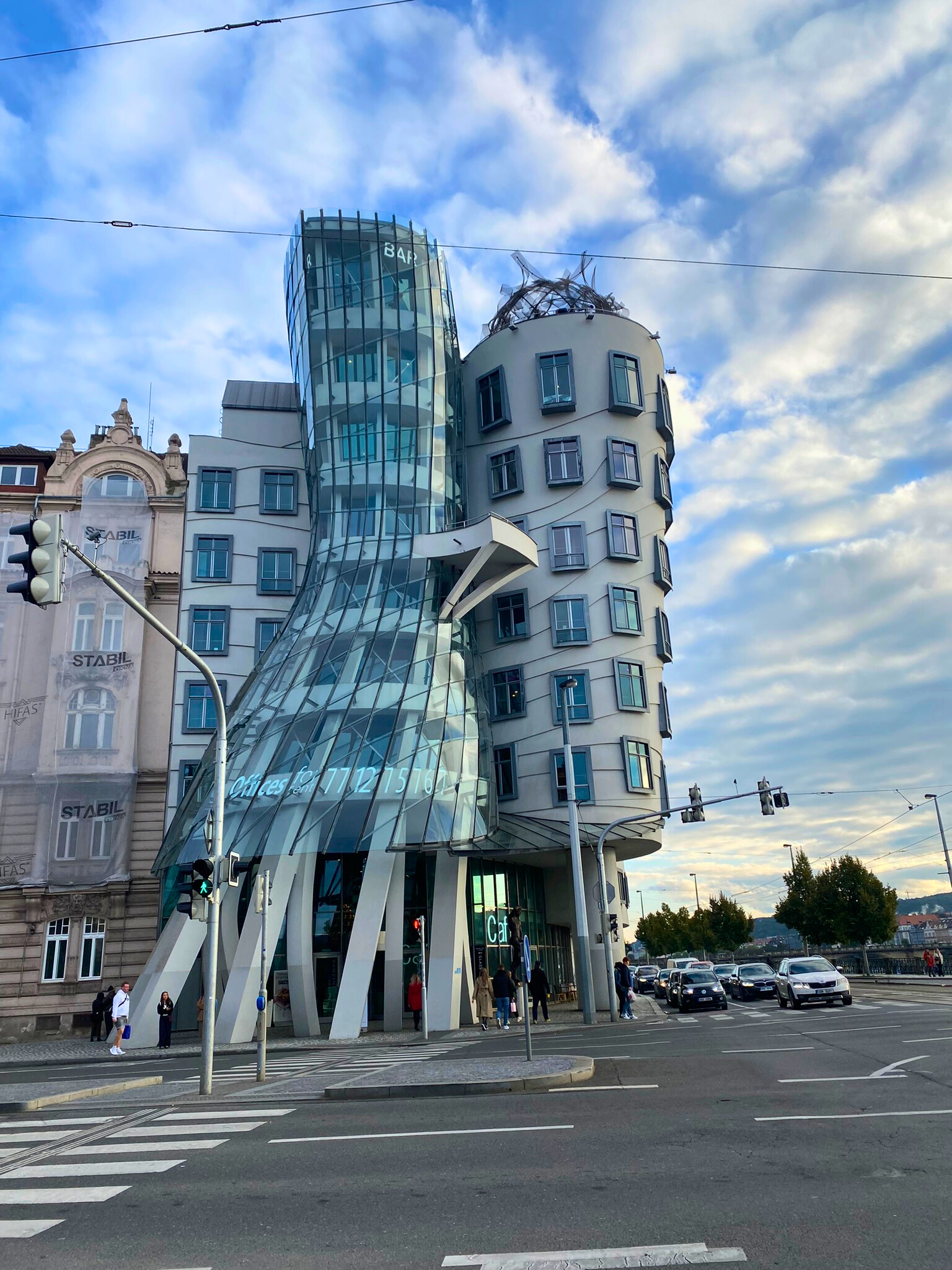
Commissioned by a Dutch insurance company from Canadian architect Frank Gehry, the Dancing House is considered an important work of deconstructivism. Today it has office floors and a restaurant on top. Resembling a dancing man and woman, it is widely linked to Fred Astaire and Ginger Rogers — many call it Fred and Ginger rather than Dancing House. Map location purple 31.
19. Prague Castle
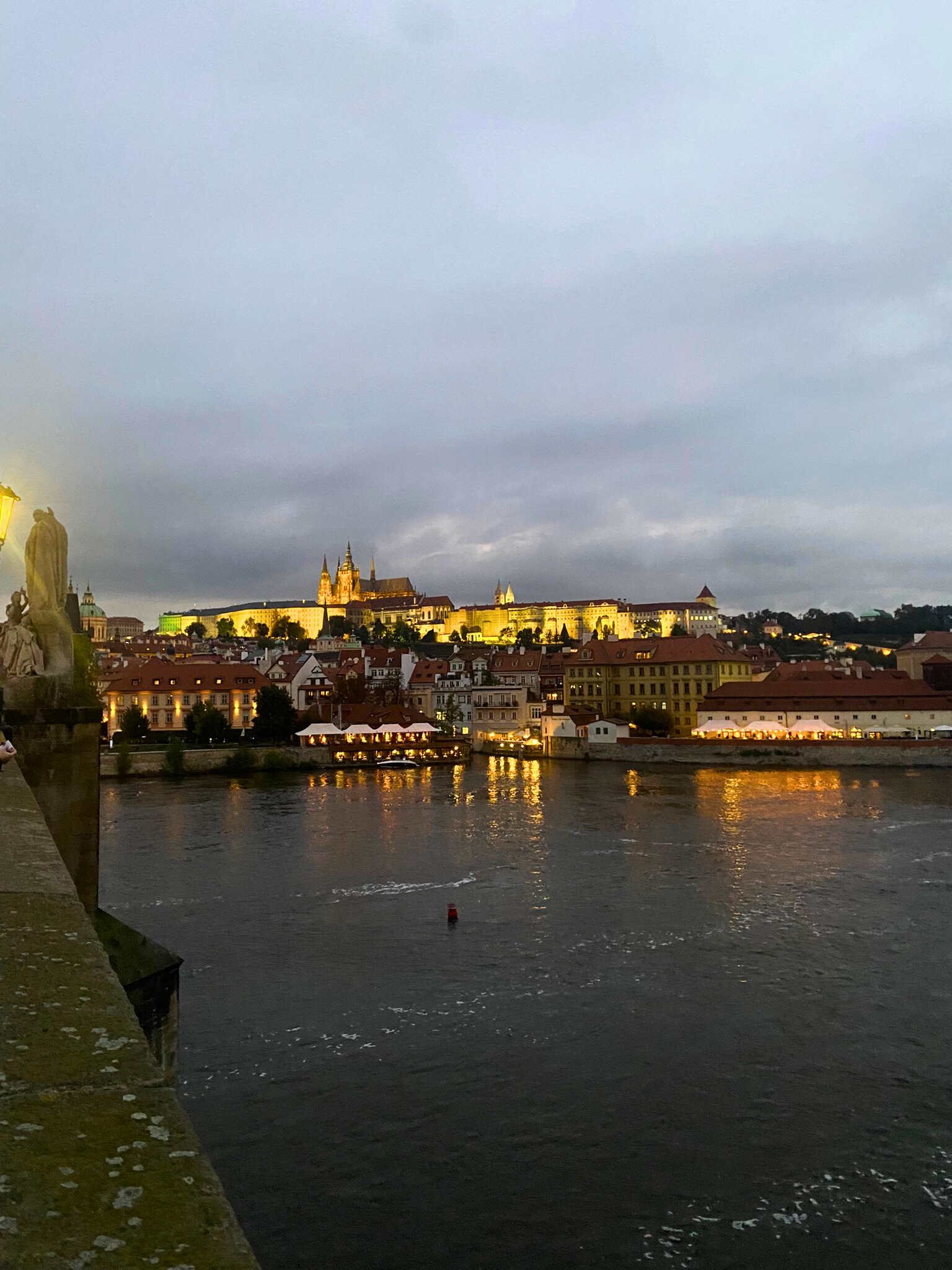
Though called a castle, it is not just walls like castles we know at home. It is a complex of buildings within walls, the oldest from the 9th century. On the UNESCO World Heritage List, it is one of the most important places to visit to understand Czechia. Structures added over many years make it a living open-air museum of architectural history. You can visit free areas, paid areas, or with a tour. Free areas are limited, so I recommend seeing this historically important castle properly. We joined an audio-guided tour: met our guide at a set point for an overview, then continued with headphones. If you visit paid areas, allow at least half a day; for a detailed visit, set aside a full day. It is one of Prague’s most touristy spots and crowded. If you time your visit for noon in front of the still-active presidential office inside the castle, you can watch the changing of the guard.
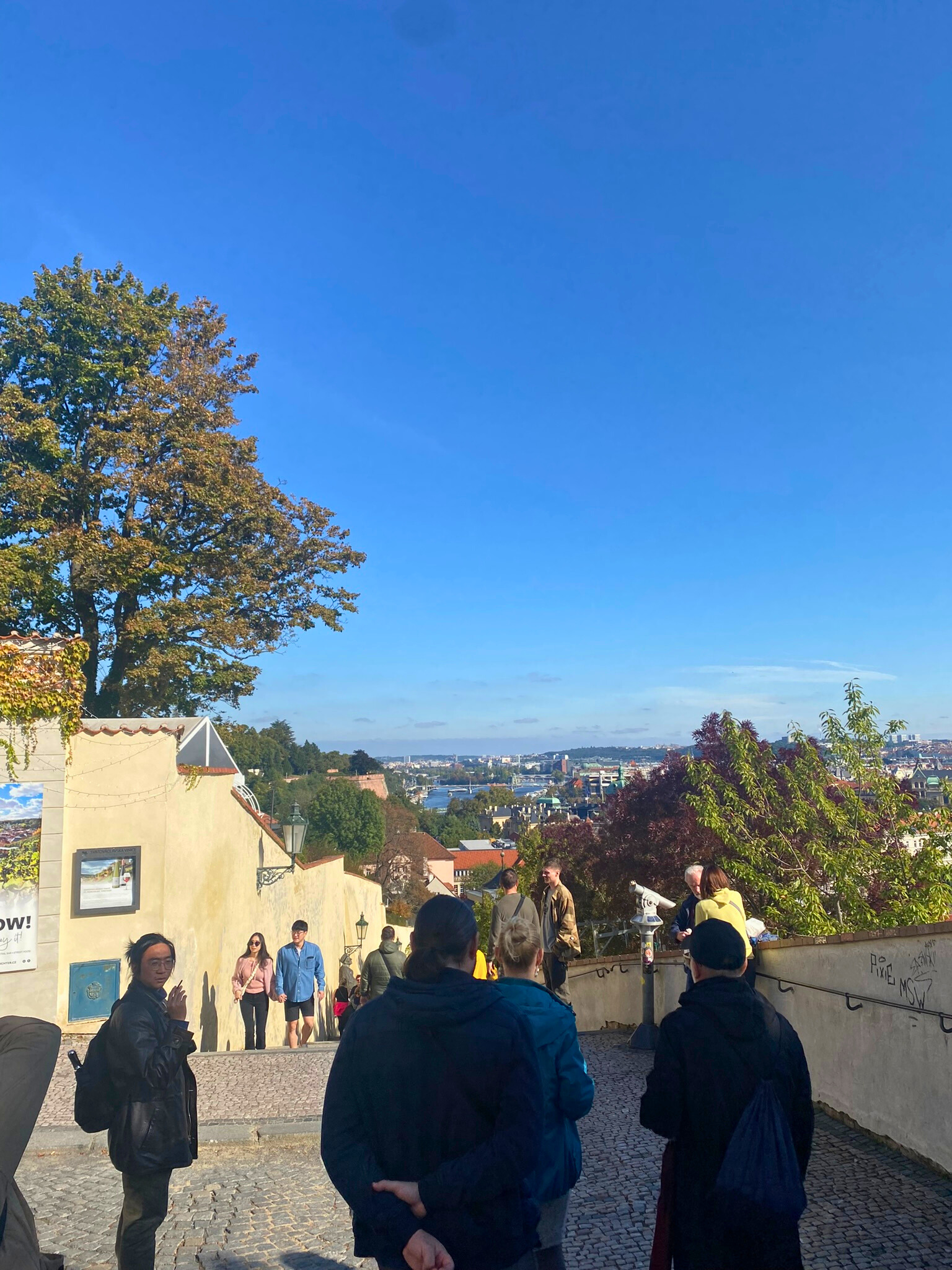
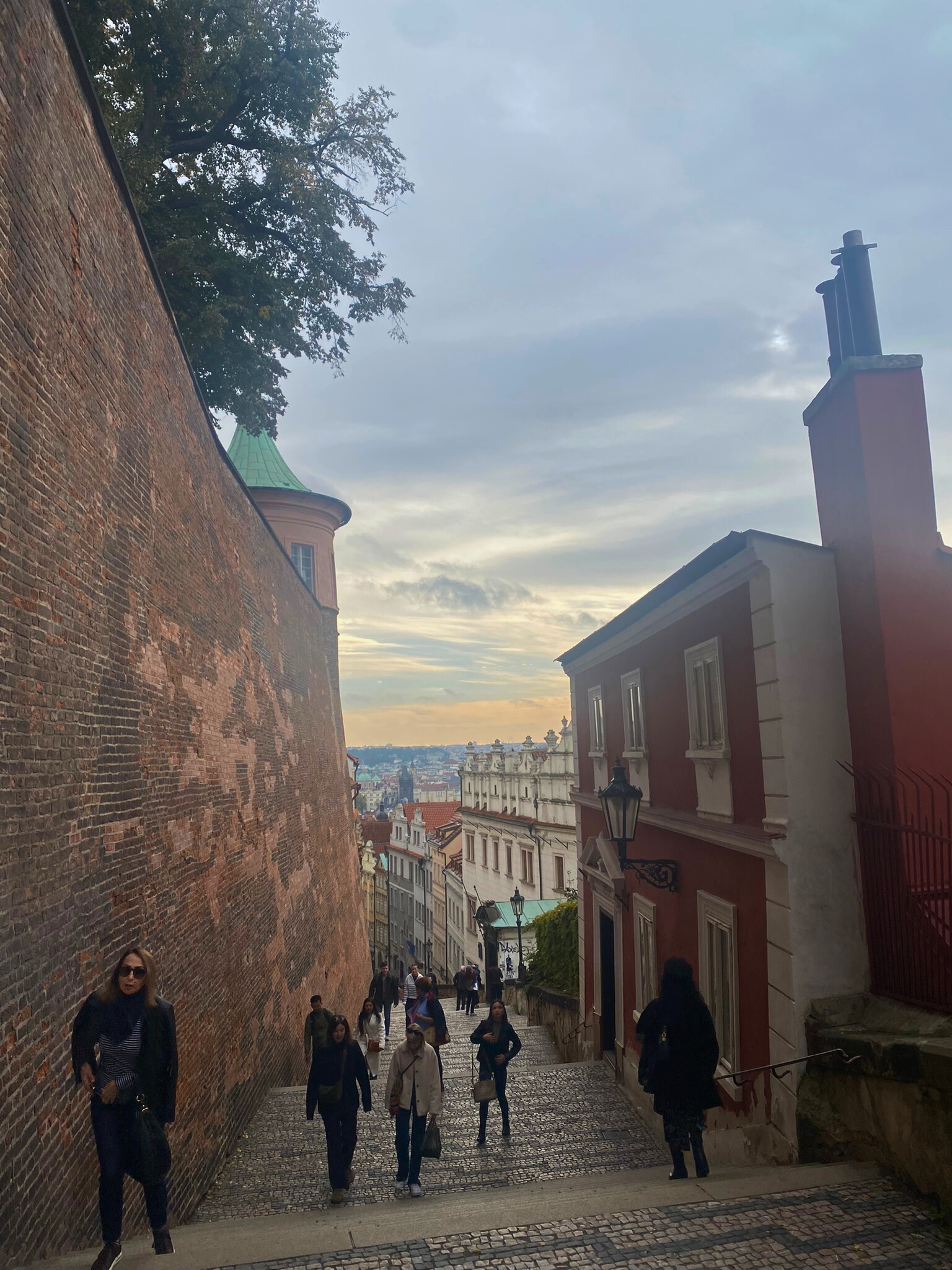
Reach the castle by tram, or walk up via two pedestrian options: the historic castle stairs, or the sloping Nerudova Street through a historic neighborhood. We went up Nerudova and down the castle stairs — the reverse works too. Nerudova has charming historic façades, a neighborhood feel, sweet cafés, hotels, and souvenir shops.
Inside the complex: the presidential office, churches, and museums. Highlights include:
a. Lobkowicz Palace
Built by the Lobkowicz family in the 16th century. Displays family belongings and art collections; also used for events and concerts. Map location purple 34.
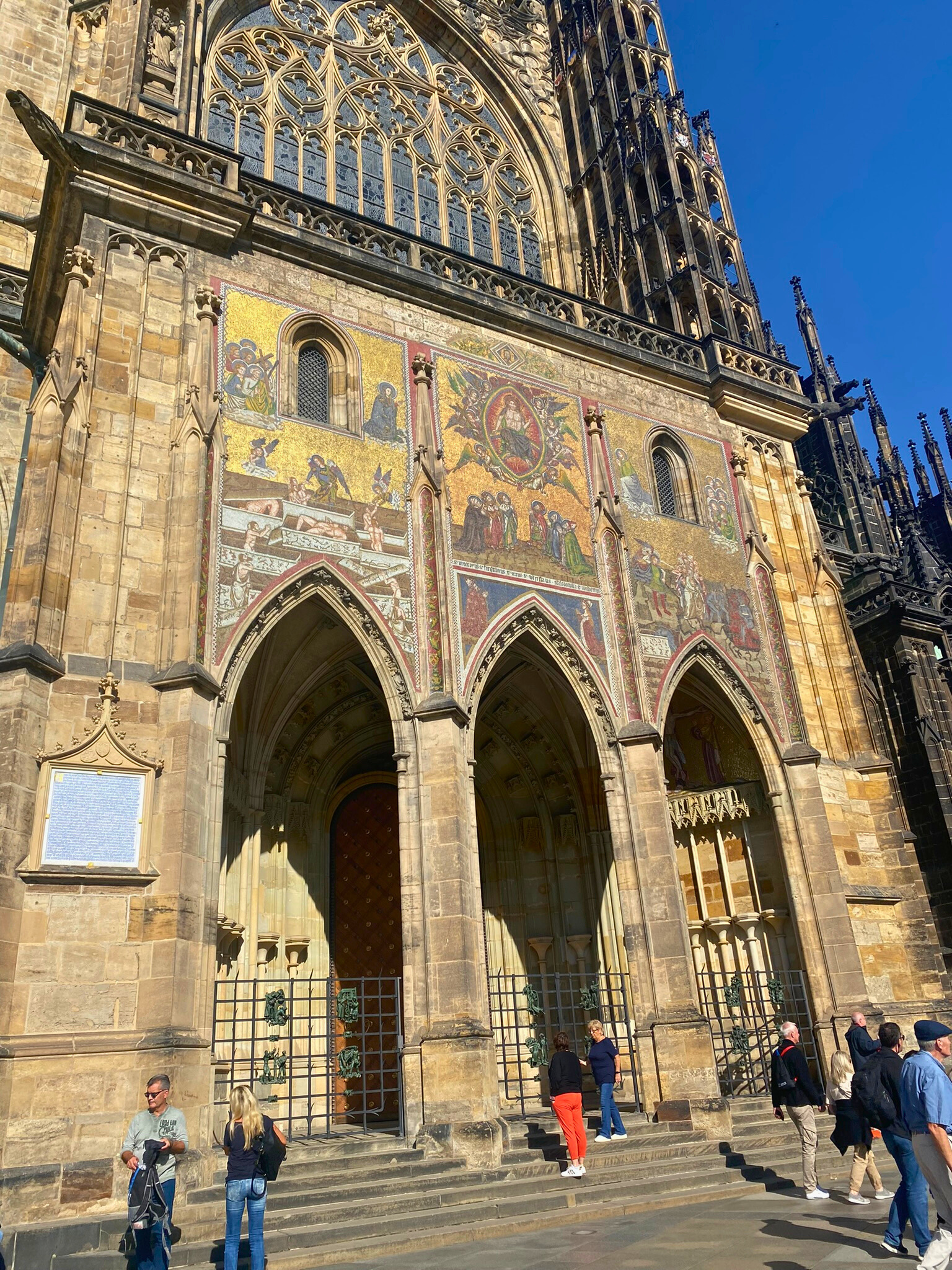
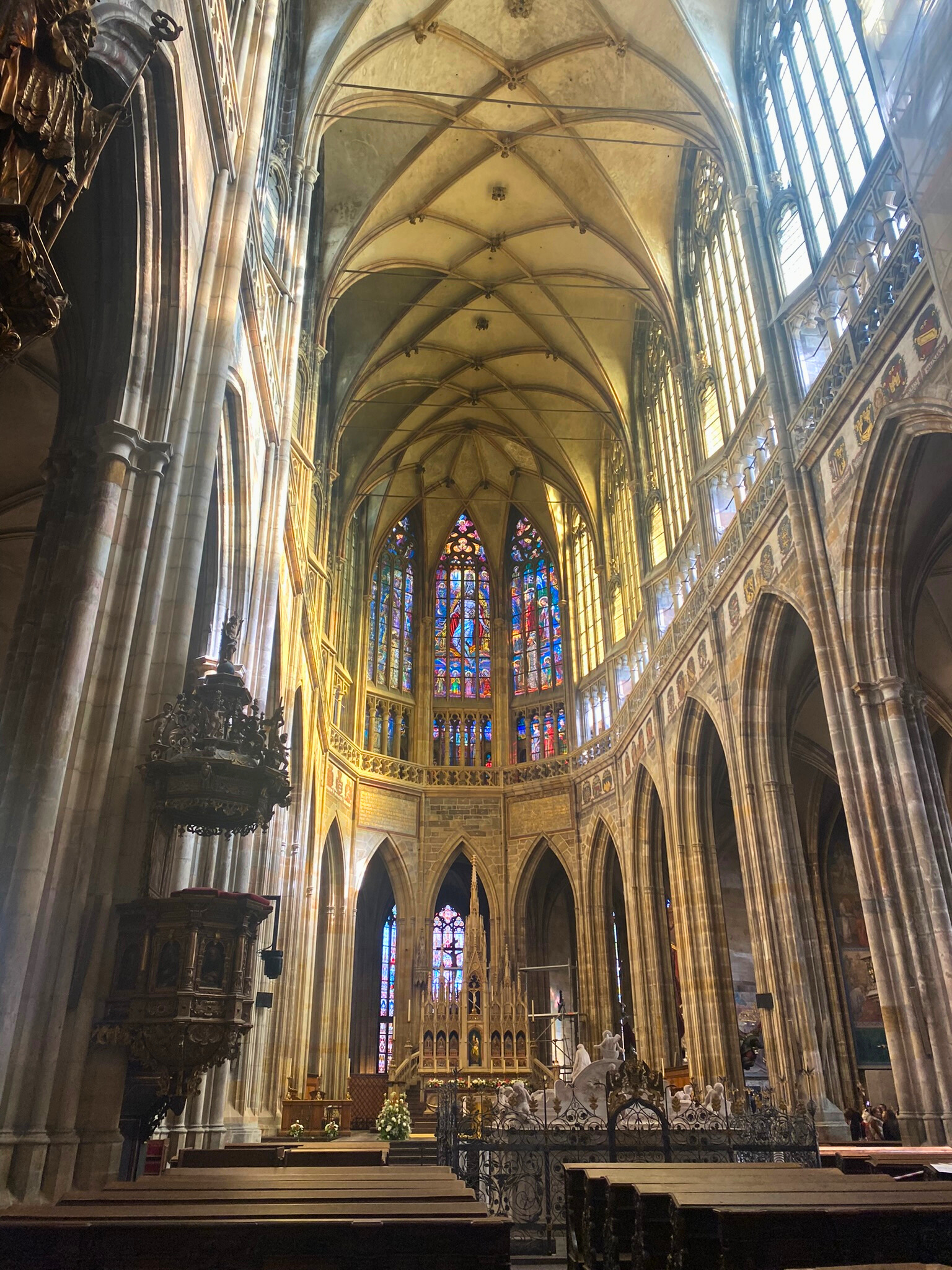
b. St Vitus Cathedral
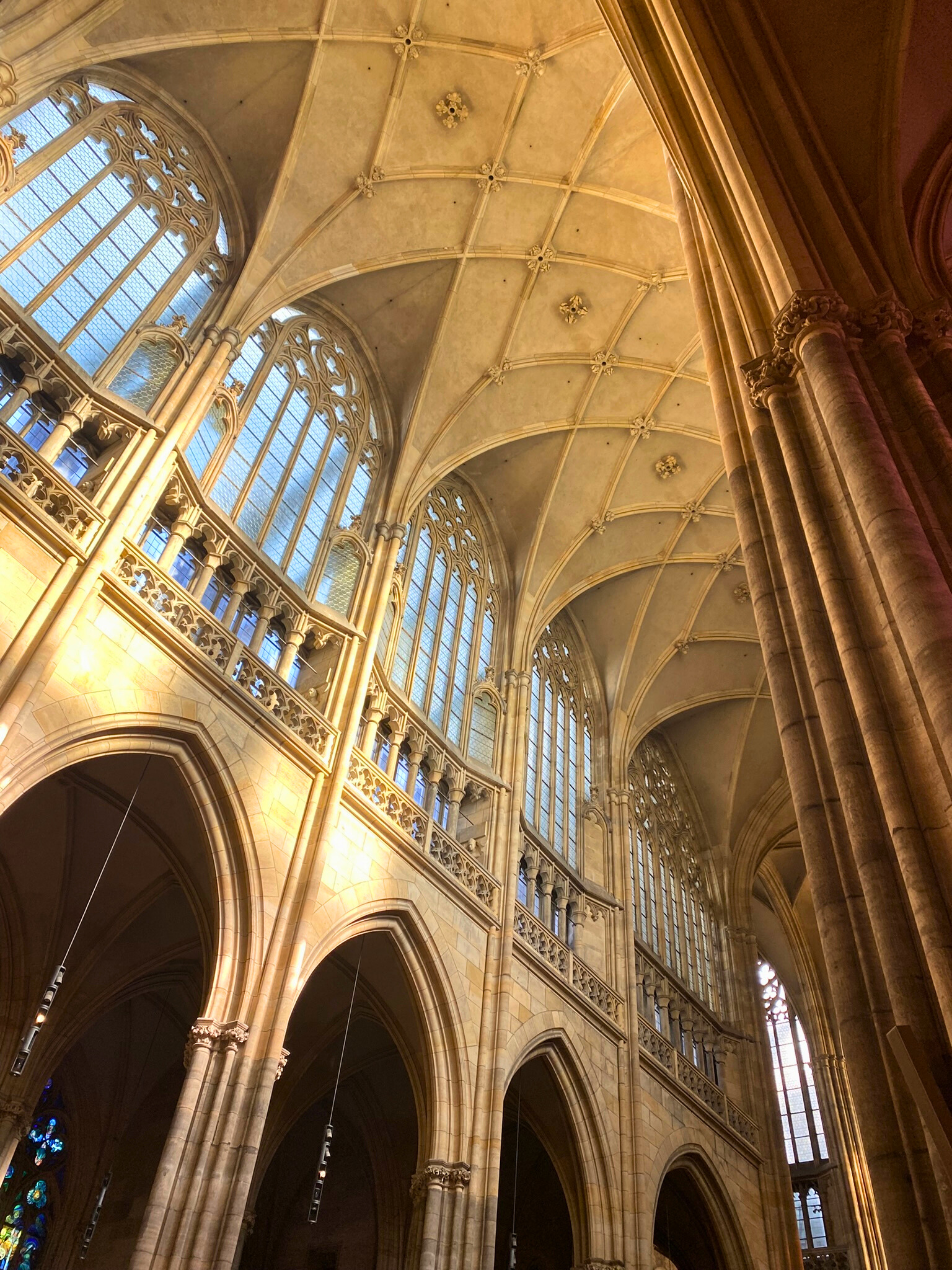
Historically very important for Czechia. Construction began in 1344 under Charles IV and took about 600 years — so it reflects the styles of the periods it passed through. Mainly Gothic, with Neo-Gothic, Renaissance, and Baroque elements.
Consecrated in 1929 as the archiepiscopal seat, it remains the center of the Czech Archdiocese. Inside are tombs of figures such as St Vitus and Charles IV, and the Chapel of St Wenceslas. The bones of John of Nepomuk — mentioned at Charles Bridge — are also here. Map location purple 38.
c. St George’s Basilica
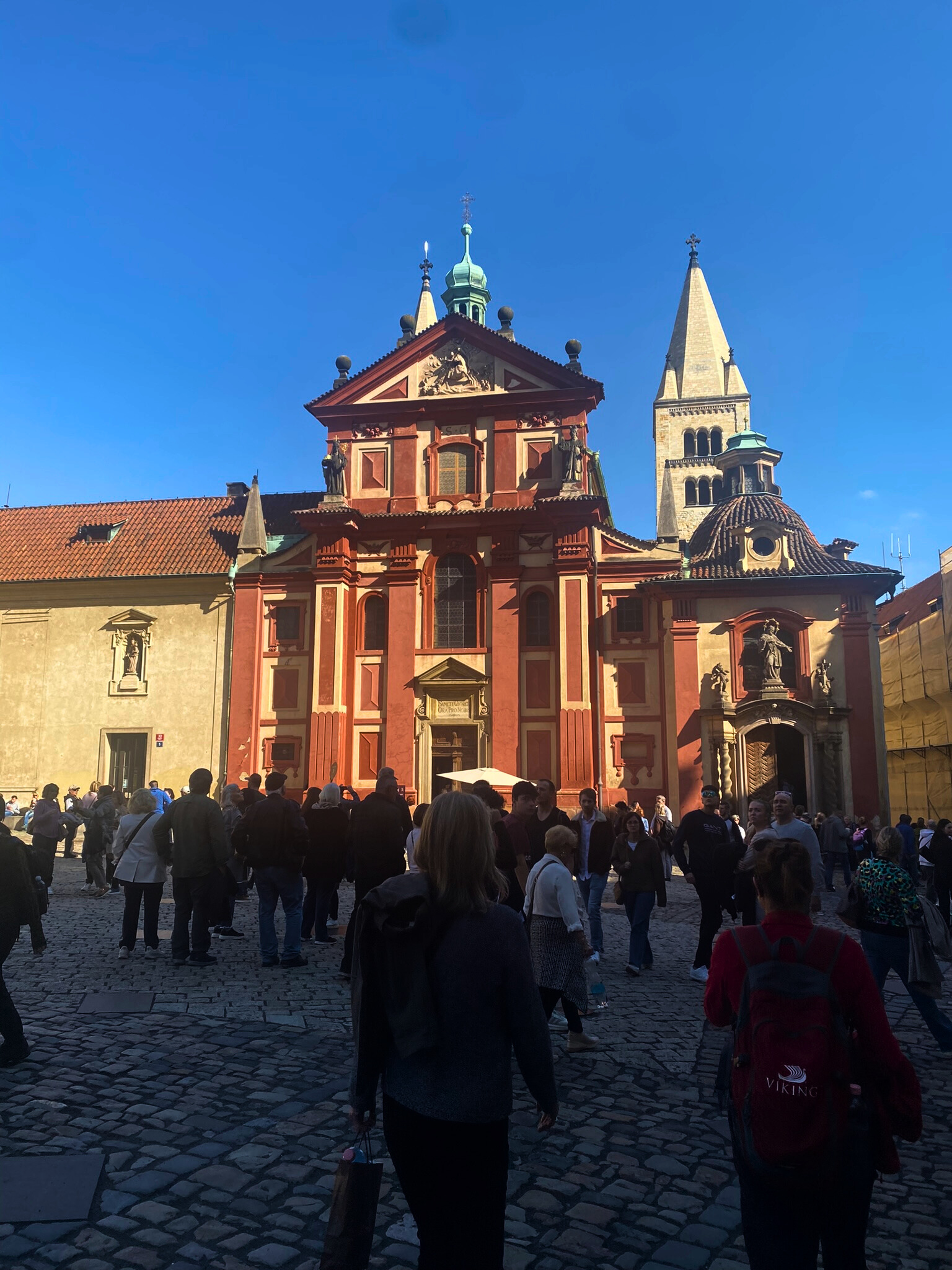
The oldest Romanesque building in the castle complex; construction began in the 9th century. Small from outside and equally plain inside. Tombs of important Bohemian Kingdom figures are here. Today it hosts events and concerts and serves as a museum hall. Map location purple 36.
d. Old Royal Palace
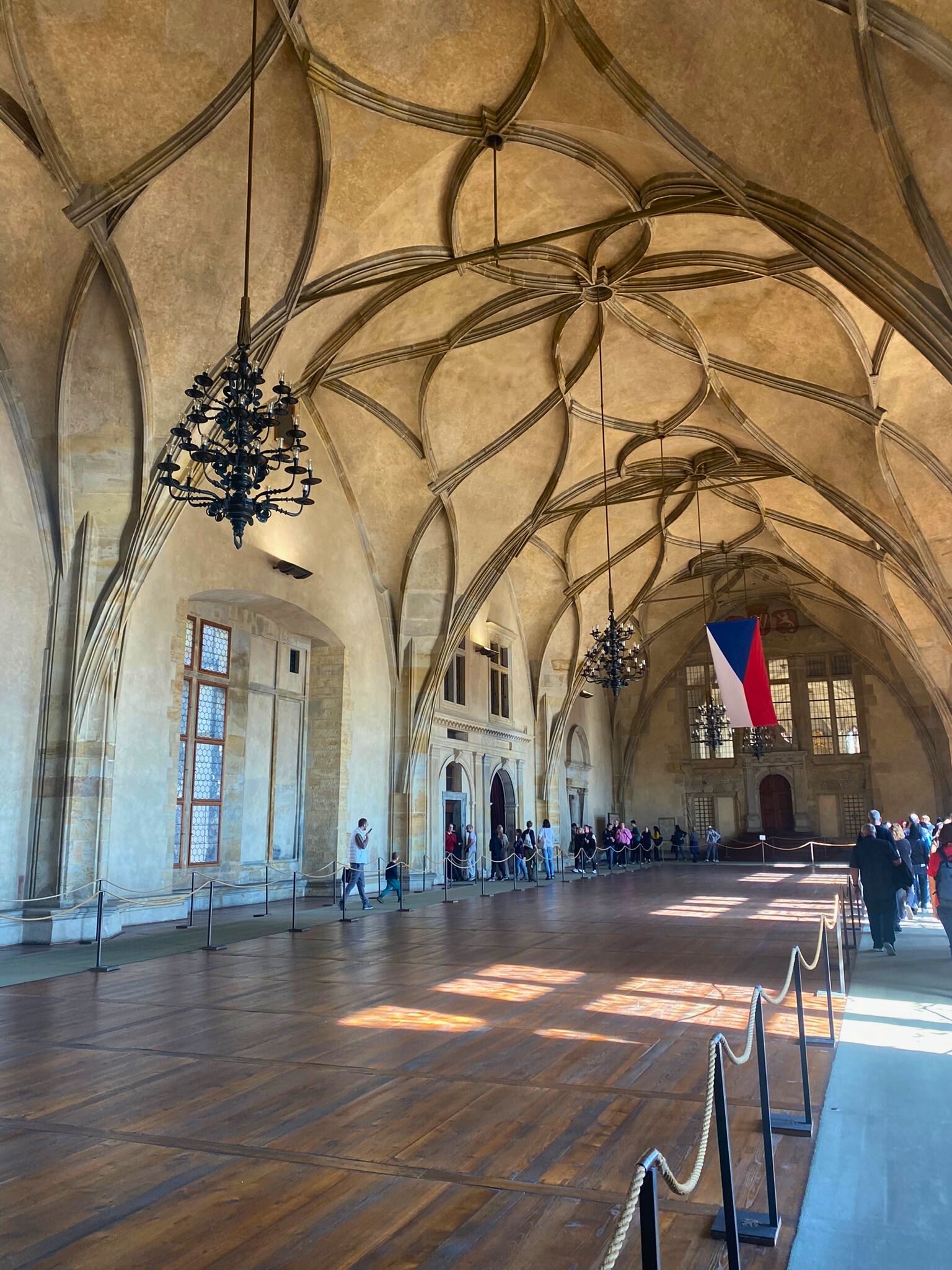
Built in the 9th century, combining Romanesque, Gothic, and Renaissance styles. Used for various purposes over time; today it functions as a museum. One standout is Vladislav Hall with its vaulted Gothic ceiling — 62 m long and 16 m high, carried by vaulting without a separate support system. Coronations, tournaments, and feasts were held here for centuries; state ceremonies still are. The Land Diet (Czech assembly) room is also in this building. In 1618, anti-Habsburg Protestants threw two governors and a secretary from a window here, starting the Thirty Years’ War — that window can still be seen. Map location purple 37.
e. Golden Lane
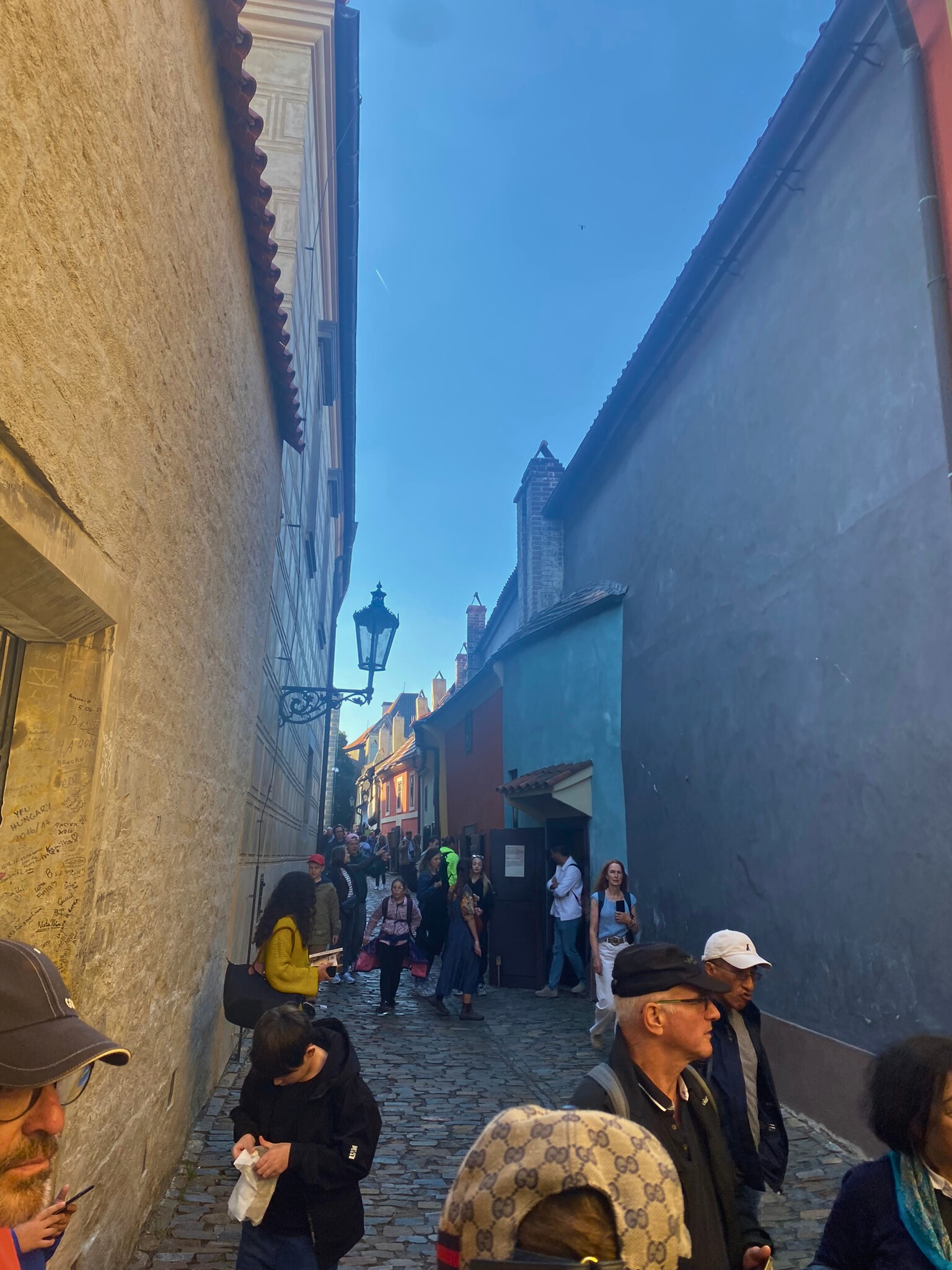
Near the castle exit, a small cobbled street. The two-story little houses once housed castle staff, servants, and goldsmiths. Franz Kafka lived for a time at number 22. Today the houses hold souvenir shops. Map location purple 35.
f. Paradise Garden
Coming up Nerudova and climbing the castle stairs marked Zámecké Schody on the map, Paradise Garden is right beside you. Enjoy the garden and Prague city views. Map locations purple 40 and 41.
20. Franz Kafka Museum
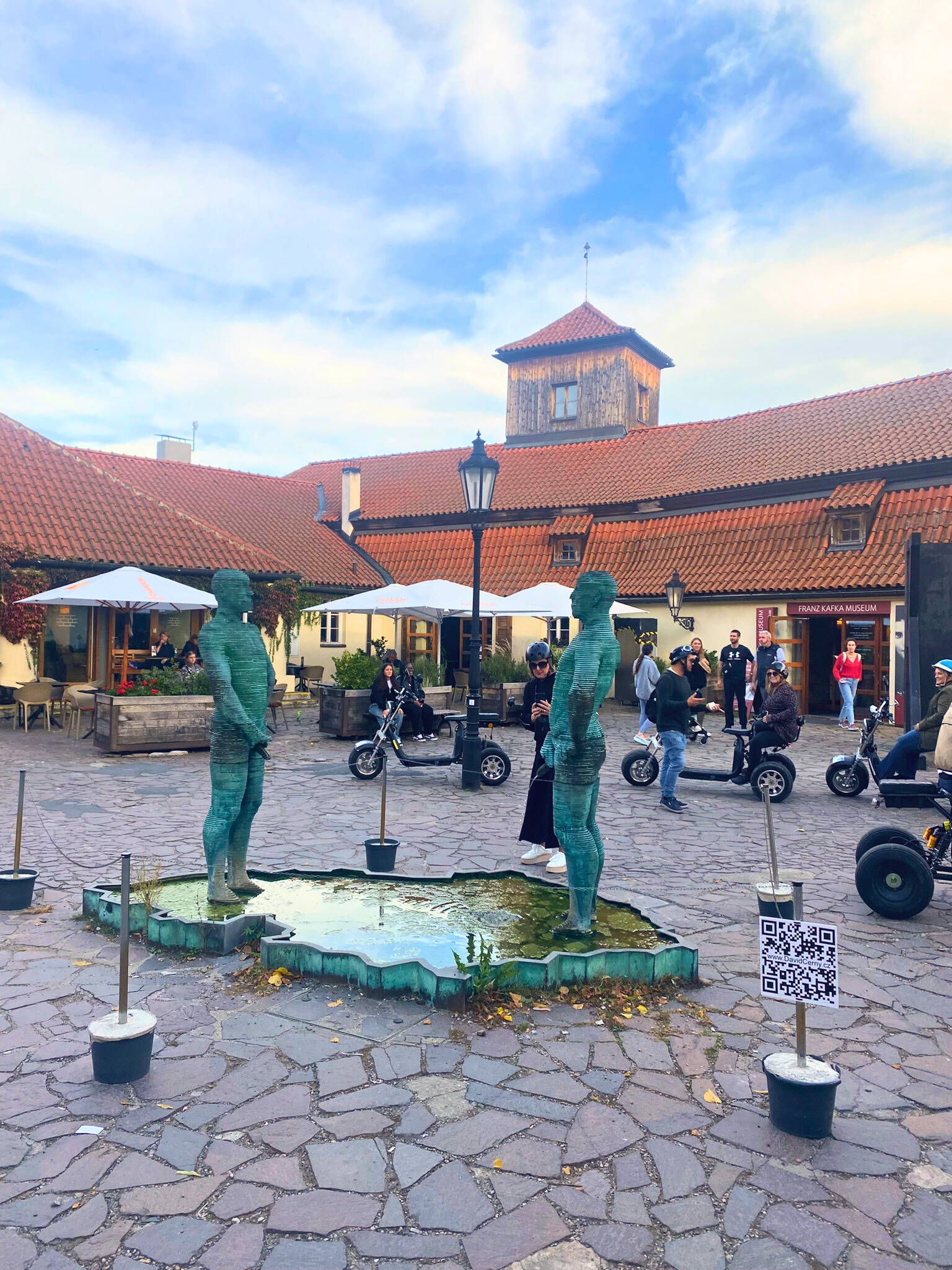
Right by the river, with a charming garden and surroundings. We did not go inside based on reviews — many said it was mostly Kafka notes and writings and quite gloomy. It may appeal to Kafka devotees or those who have read many of his books. In the garden is another David Černý sculpture: two men urinating on a map of Czechia. Across from the museum, do not miss the cinnamon cookies from the cookie shop — fresh and fragrant. Map location purple 51.
21. Prague’s Narrowest Street
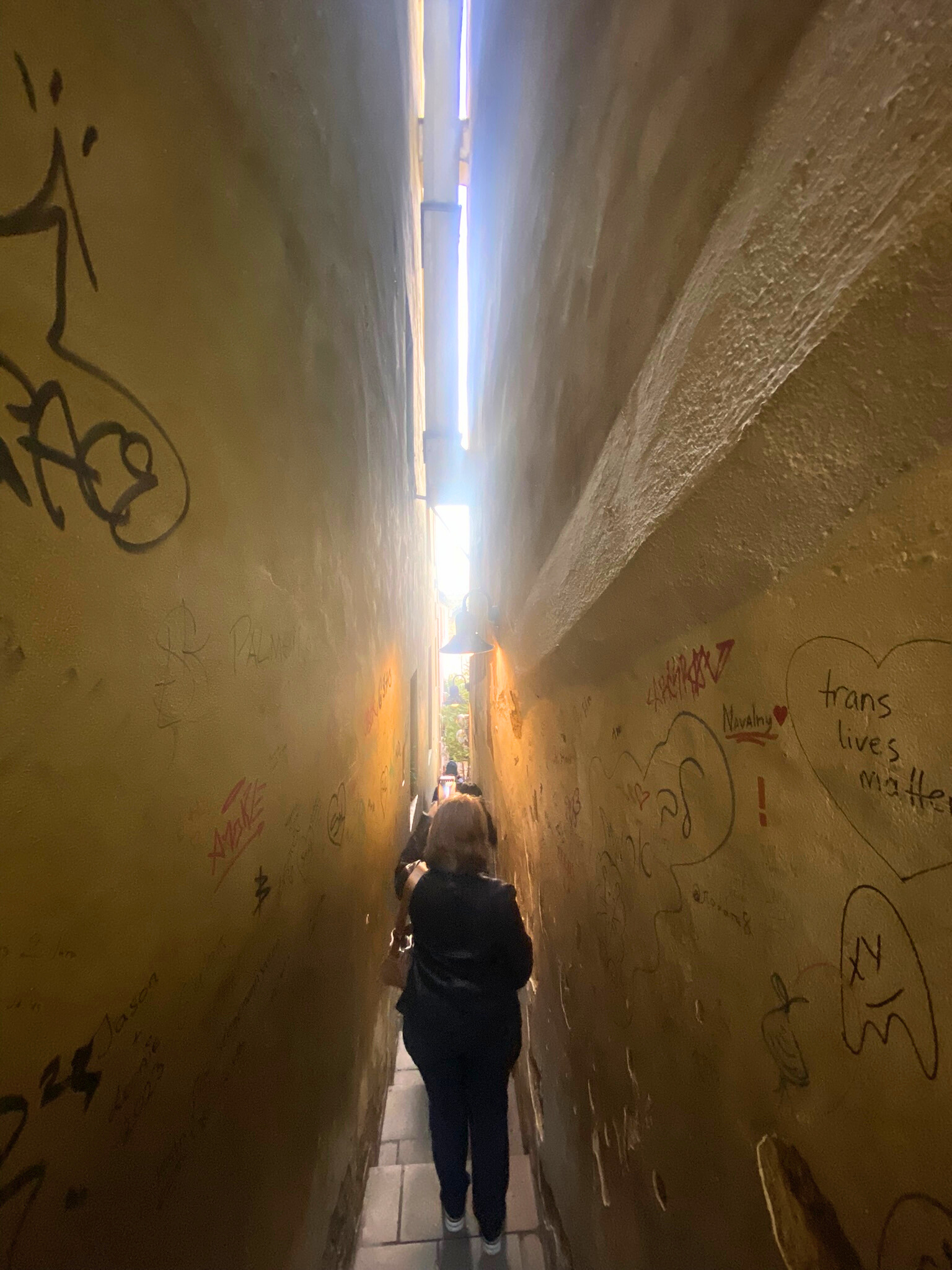
Somehow this has become a big tourist spot. Less a street than a gap between two buildings, wide enough for one person. At the end is a café by the river. In my view it has little unique character — but some cities have spots that oddly draw crowds. There are even traffic lights at both ends. Map location purple 52.
22. Lennon Wall
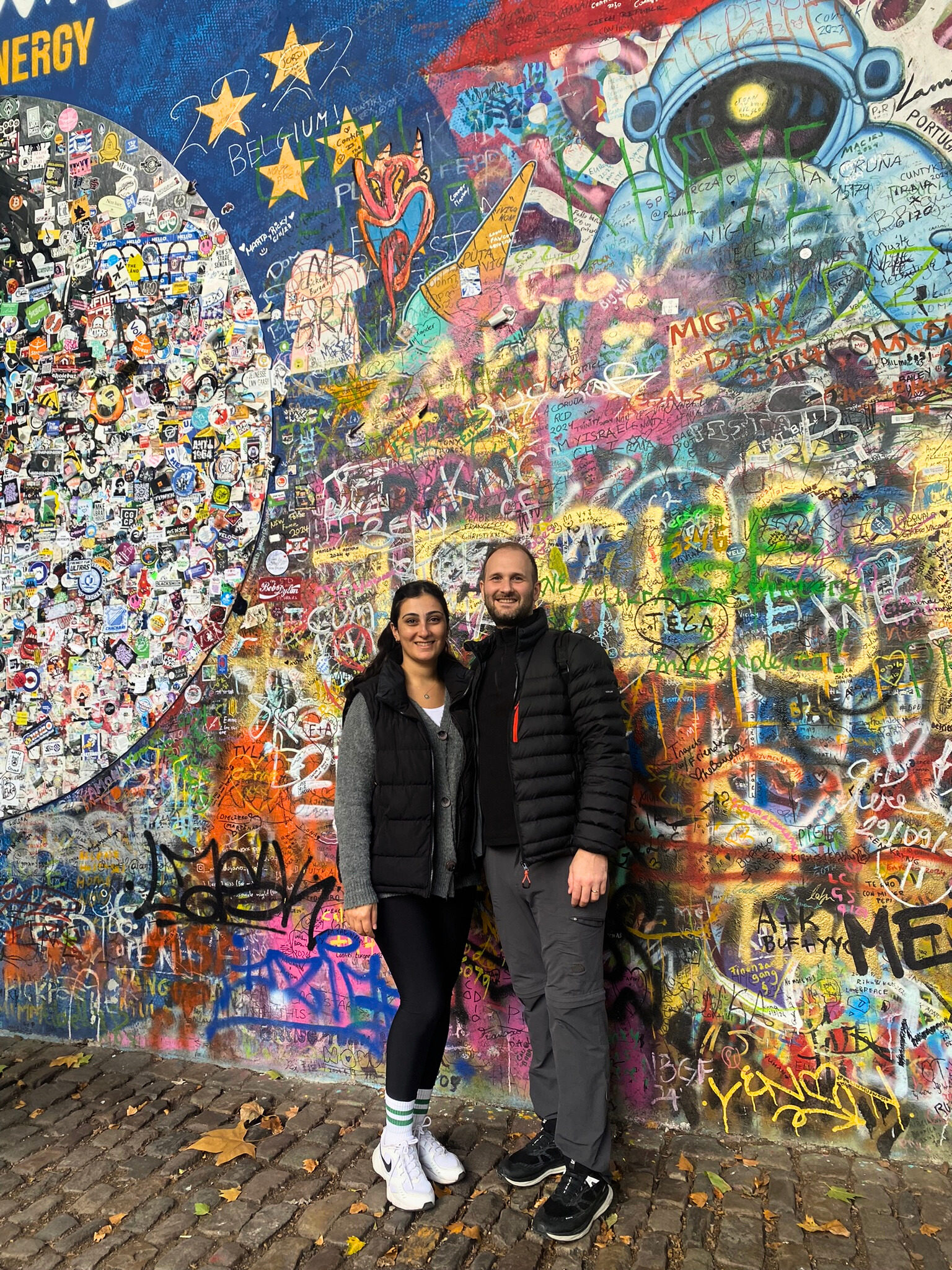
A portrait of John Lennon was painted here in his memory; later writings and graffiti turned the wall into a speaking political symbol. With its freedom-and-peace messages, it became fully identified with Lennon as the Lennon Wall. One of the best photo spots thanks to the original graffiti. Map location purple 53.
23. Water Mill with Gremlin
On the Malá Strana side, on the way to the Lennon Wall, this historic mill sits on the Čertovka Canal. No longer active — its historic character is the tourist draw — but watching the water and the wheel turning was oddly very pleasant. The street around it is calm and lovely. Pass through on your way to the Lennon Wall. Map location purple 43.
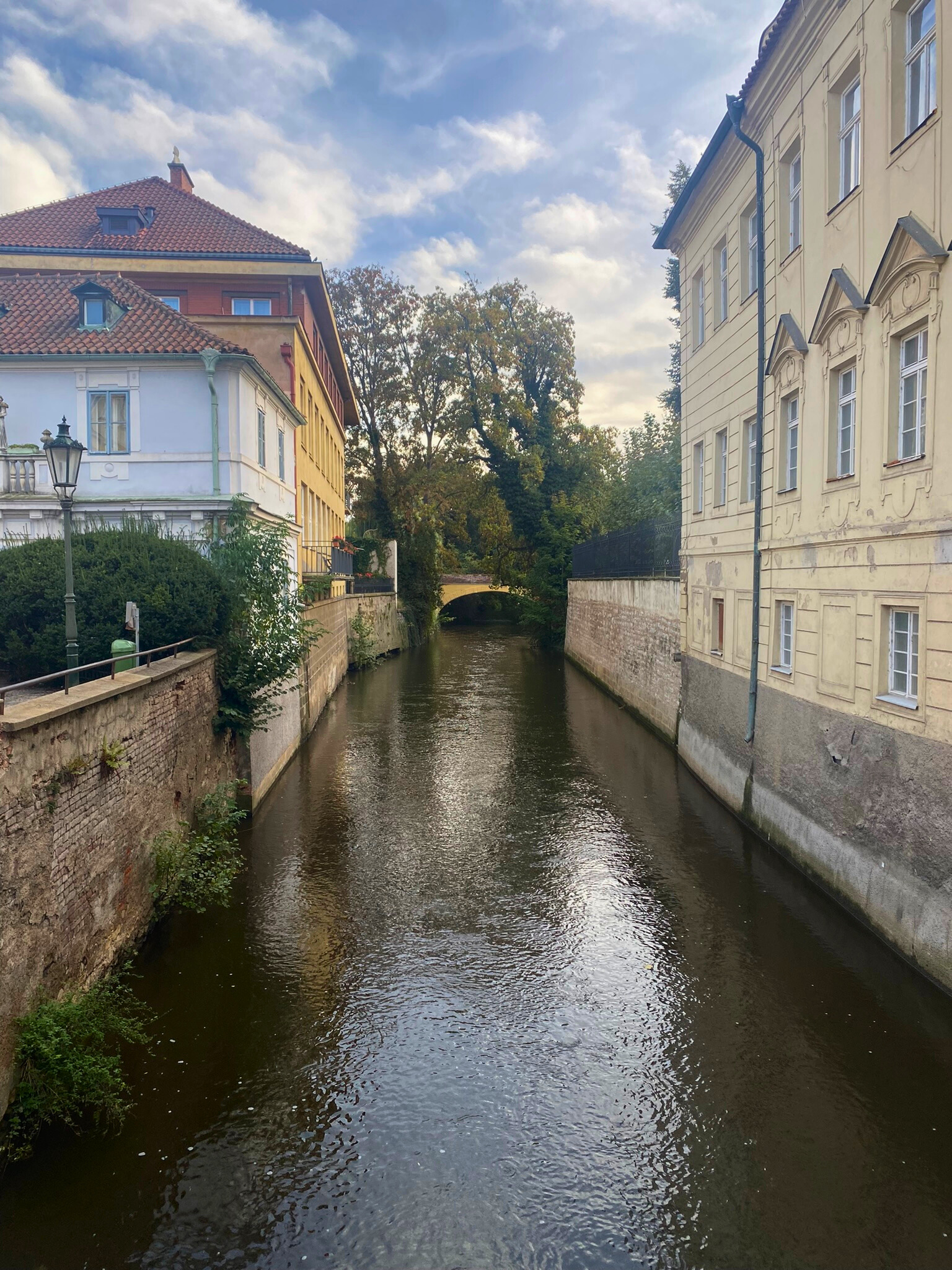
Prague Food Recommendations
What to Eat and Drink in Prague?
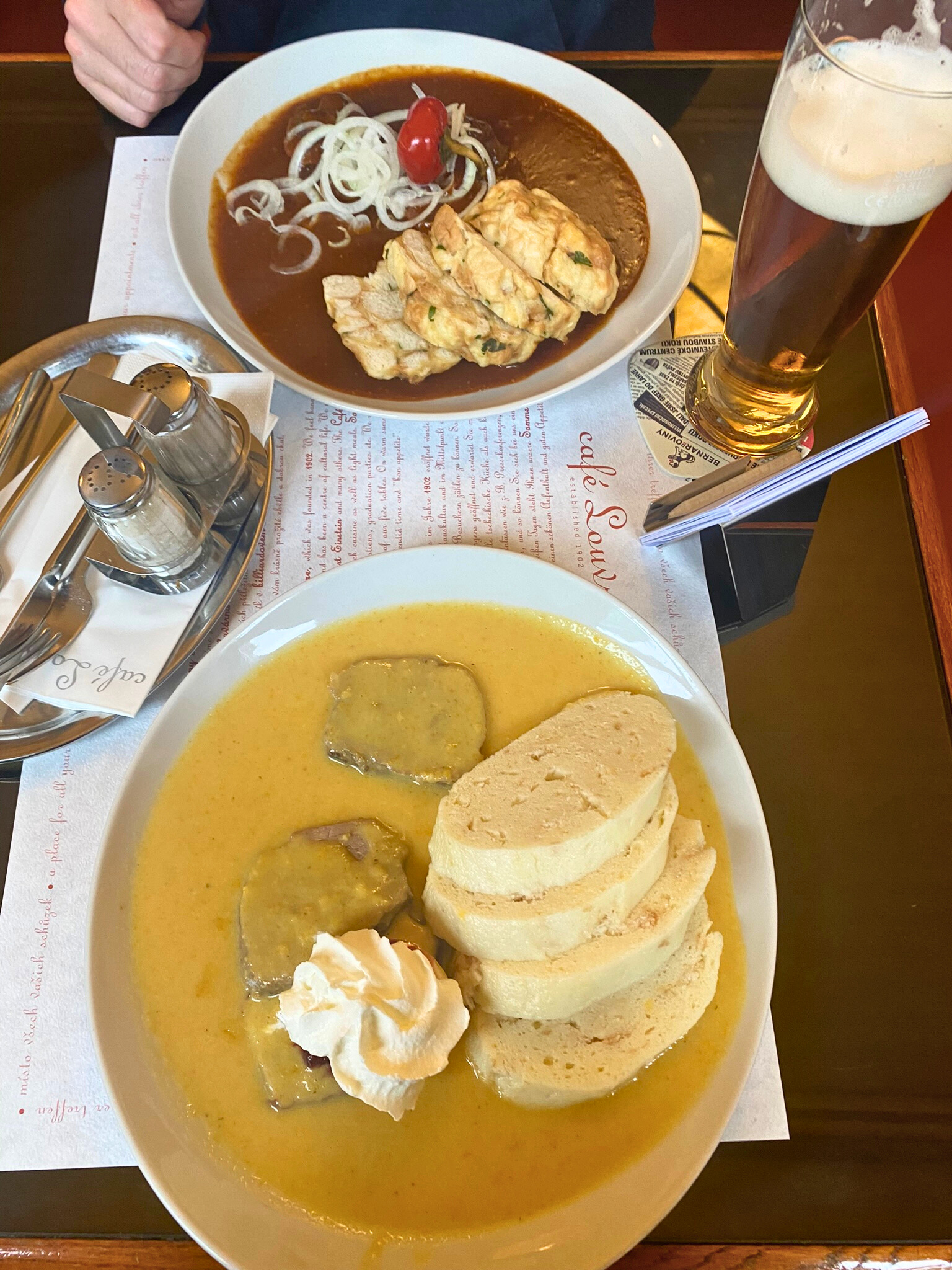
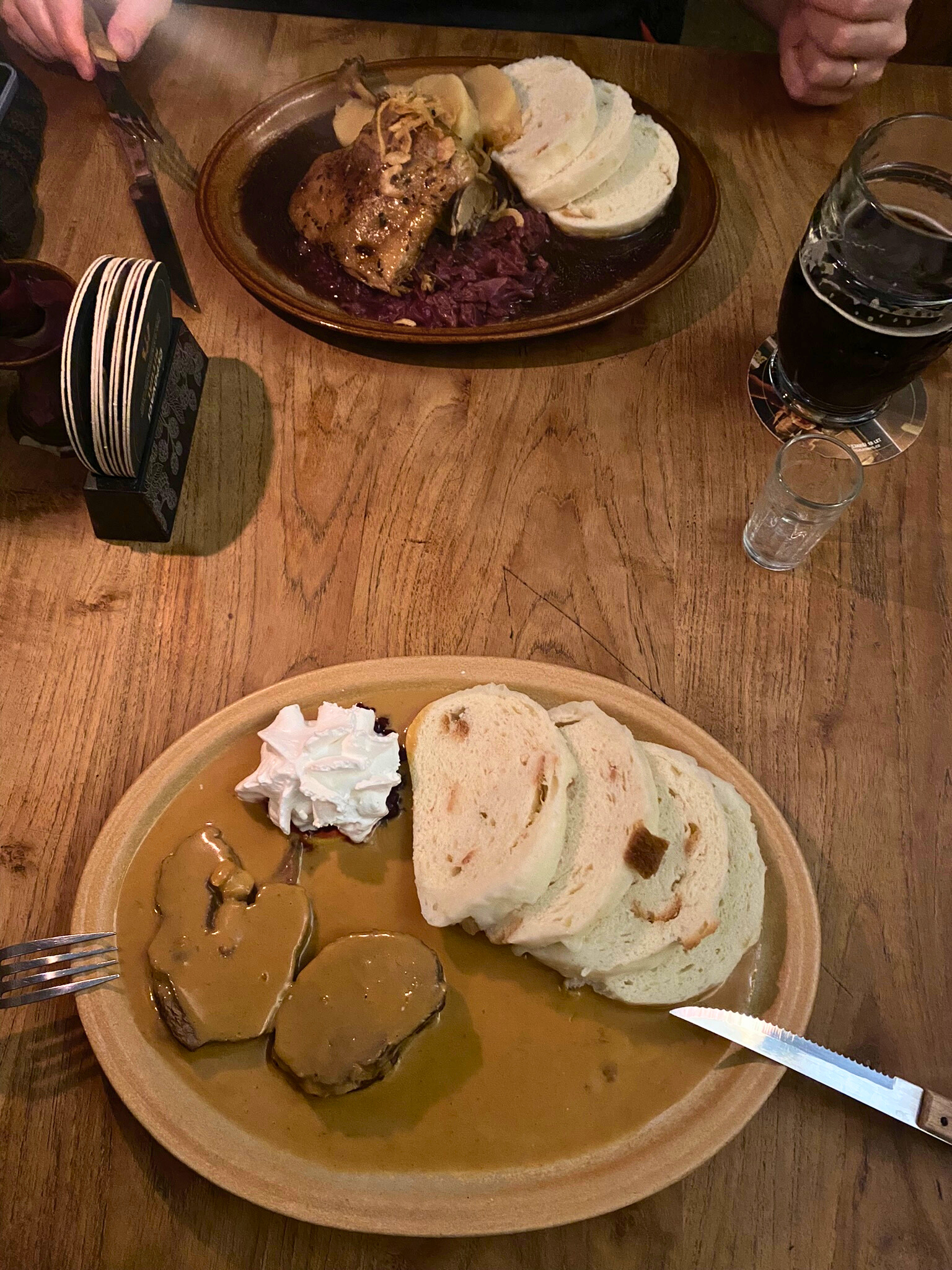
1. Svíčková
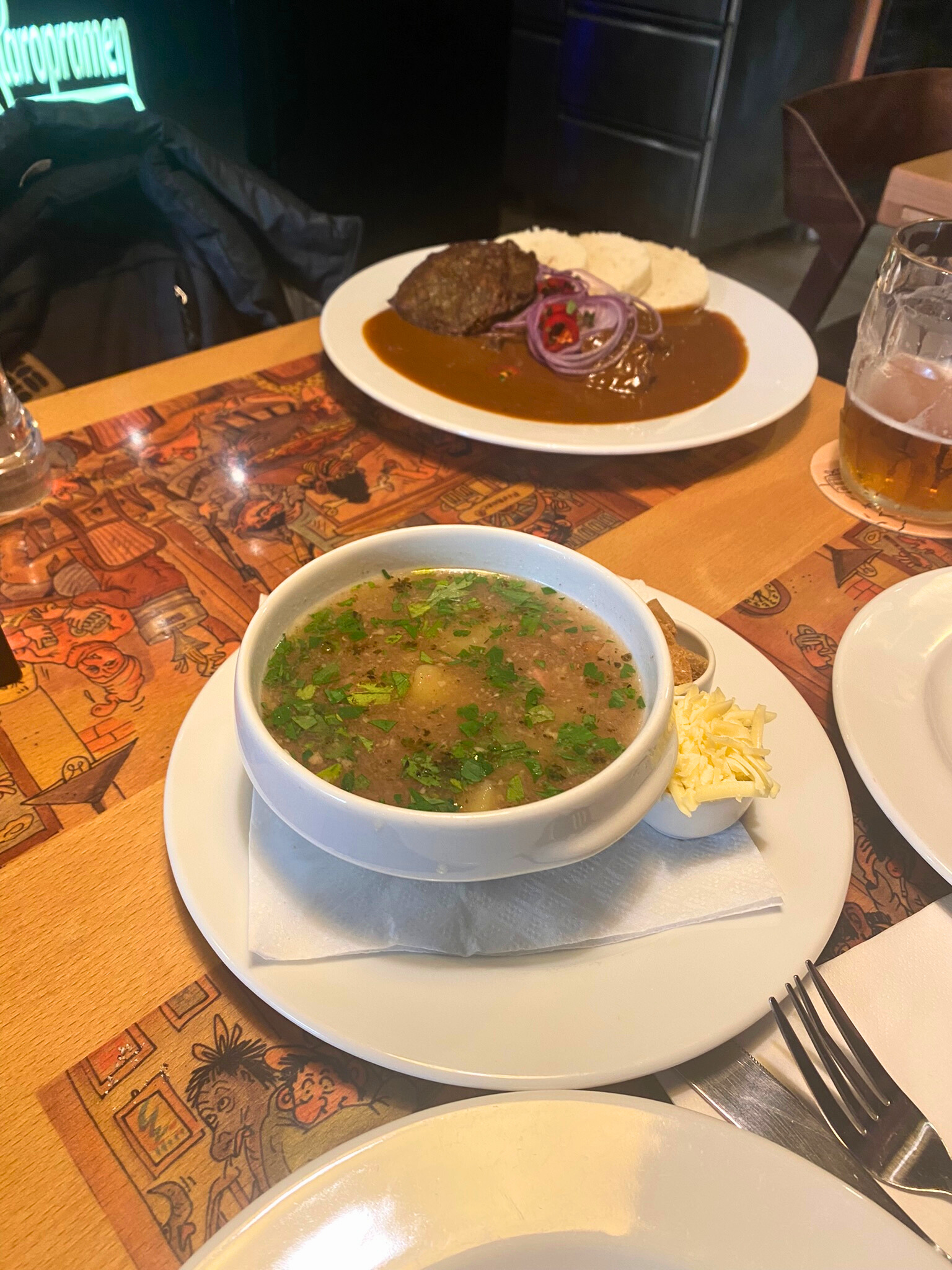
Beef tenderloin cooked in a cream sauce, topped with whipped cream and cranberry jam, served with sliced bread dumpling with the toasted ends cut off. It may sound odd at first, but it was by far my favorite meal in Prague — I went for svíčková three days in a row. 🙂 In the photo, the lower plate is svíčková and the upper is goulash.
2. Goulash
Of course one of the dishes Central Europe brings to mind is beef goulash — beef cooked in a tomato-based sauce. Closest to our palate among the local dishes, widespread, tasty, and filling.
3. Pečená Kachna / Roast Duck
Again close to our taste. Duck roasted for a long time, served with sauerkraut and bread dumpling with edges cut. Duck is, to me, tastier and fattier than chicken — recommended. In the photo the lower plate is svíčková and the upper is roast duck.
4. Trdelník
A famous Central European sweet that also has a place in Czech cuisine. Cinnamon-sugar dough rolled into a cone shape, baked, then filled with chocolate, cream, etc. Worth one try, but I do not think it is as good as the hype. Very touristy — street vendors, dedicated shops, and Christmas markets sell it everywhere.
5. Czech Beer
Czech beer has a worldwide reputation. The Pilsen factory especially produces beer for the whole world. Beer is cheap and heavily consumed nationwide. Many restaurants and cafés also brew their own draft. We tried many kinds in many places and never hit a bad one. Still, recommended labels include:
- Pilsner Urquell – the world’s first “pilsner” style (from Plzeň)
- Staropramen – Prague origin
- Kozel – light, popular
- Budvar (Czech Budweiser) – distinct from US Budweiser
6. Becherovka
An intensely aromatic, spicy herbal liqueur. Ideal for those who like strong liqueurs. Dense sweet herbs like cinnamon and ginger; 38% alcohol. Often taken after meals as a digestif. I had a mini tasting and have to say I could not love it.
Restaurant Recommendations
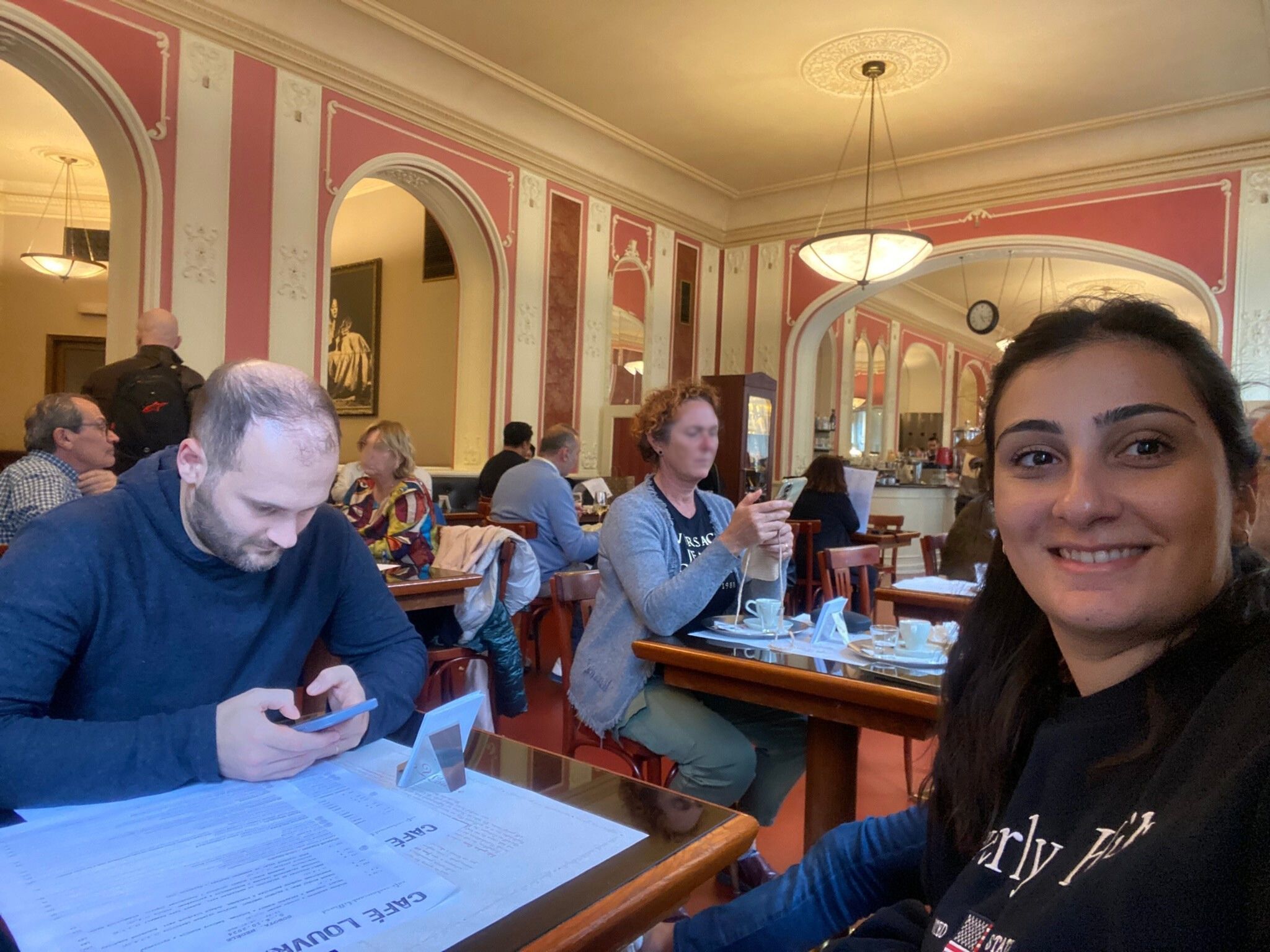
1. Café Louvre
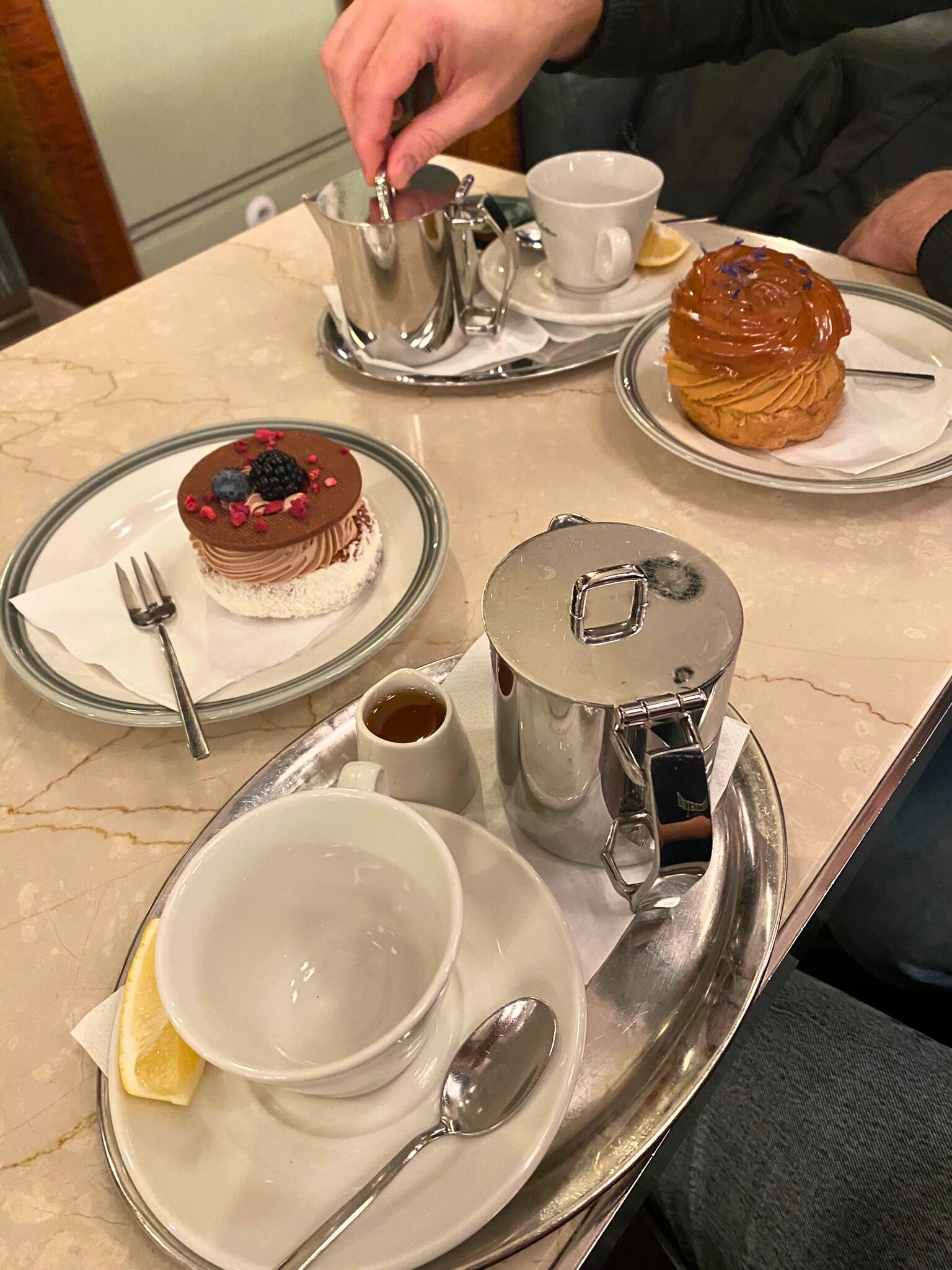
I should say the best svíčková I ate in Prague was here 🙂 Wide menu: breakfast, lunch, dinner, and desserts. I recommend goulash, the mixed dessert plate, and the pistachio dessert. They also serve Turkish coffee in a handleless cup from a copper cezve, brought by a waiter in a fez — fun to watch even if not novel for us 🙂 Some days you wait because of crowds; just after lunch is usually quieter. Map location blue 1.
2. Café Slavia
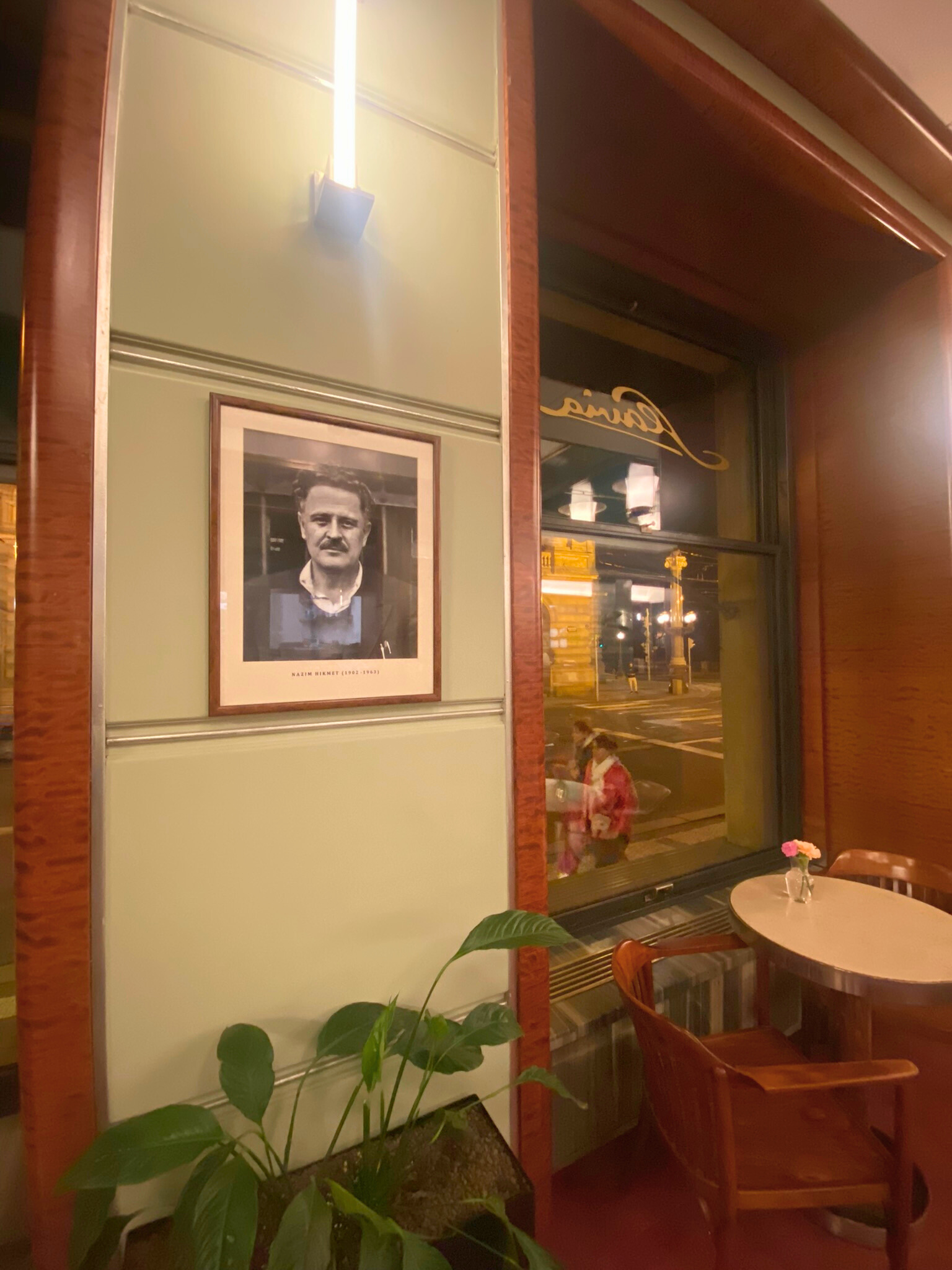
By the Vltava, with the feel of an old café in its décor — and special for us because Nazım Hikmet once sat here with friends. Breakfast, lunch, and dinner options; desserts are especially liked. On some days piano is played for guests. Map location blue 2.
3. U Prince
A restaurant for local dishes like duck and goulash. Food is tasty but a bit pricier than the quality and than other places, in my view. The much-praised garlic soup contains pork — worth knowing. Map location blue 3.
4. Krčma
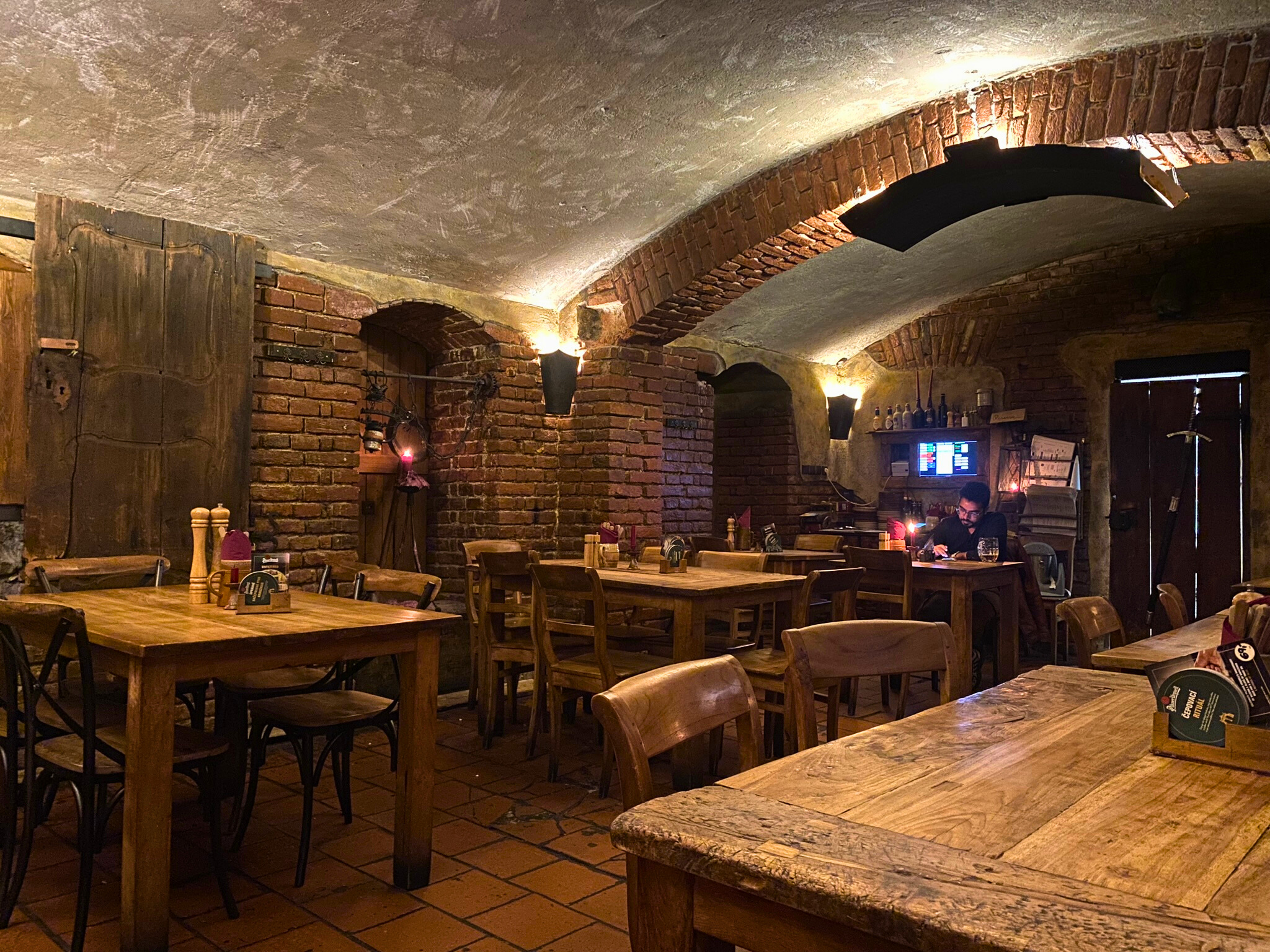
A bar-restaurant whose interior looks as if it leapt from the Middle Ages. Their house beer was good; duck and of course svíčková were delicious. Map location blue 4.
5. Paul
Pastry-shop style places selling mainly baked goods — branches in many countries, including Prague. Good for a quick breakfast on the go. Map location blue 5, with other branches in the city.
6. Sweet and Paper Days
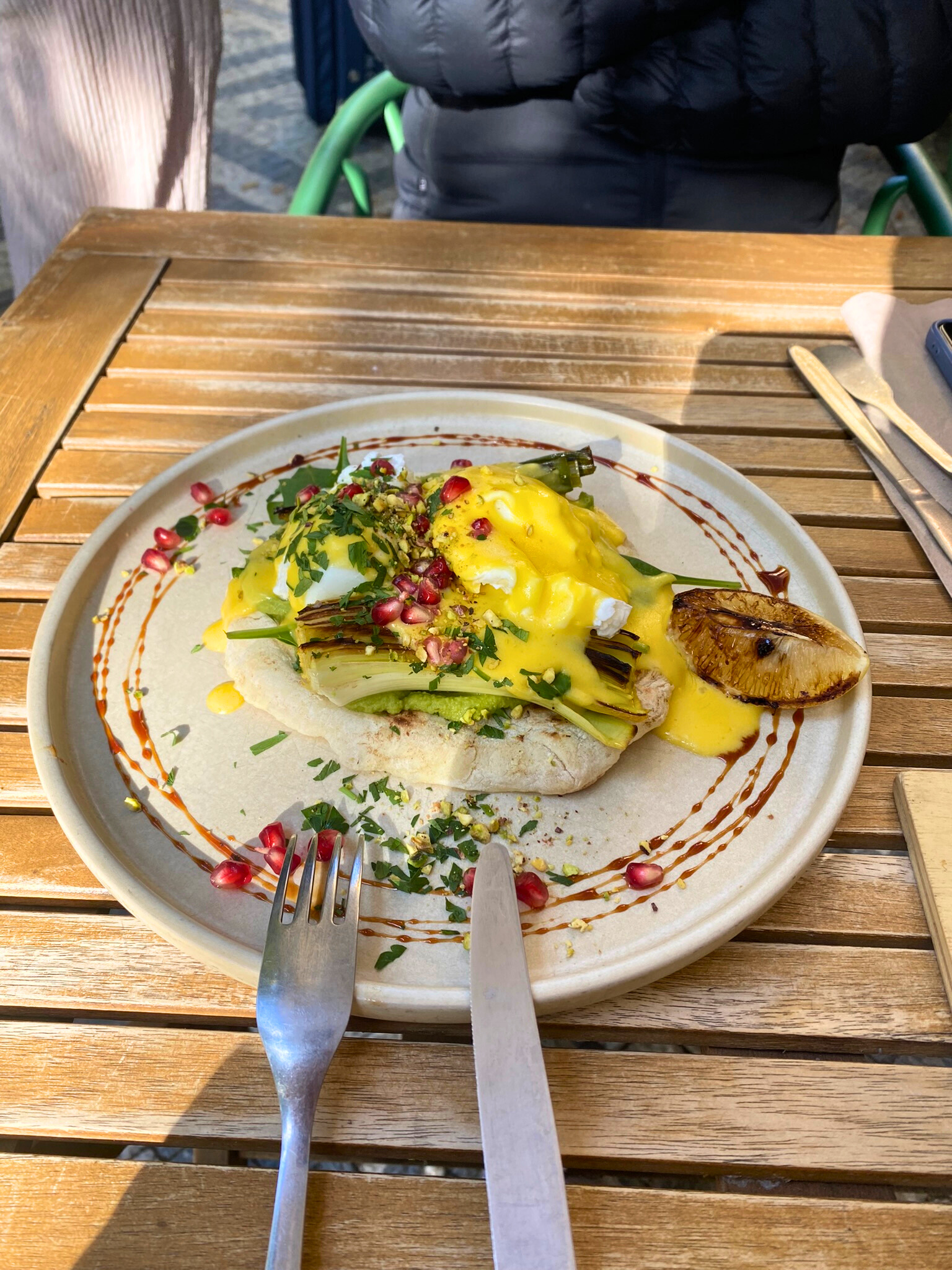
One of the nicest addresses for new-generation breakfast in Prague. Eggs Benedict, granola bowls, sandwiches, and solid breakfast plates. Highly recommended for a healthy, filling breakfast. Map location blue 6.
7. The Irish Times Bar
For an evening drink in Irish style, I recommend The Irish Times Bar. Casual and noisy, but a fun atmosphere with good music 🙂 Map location blue 7.
8. Hemingway Bar
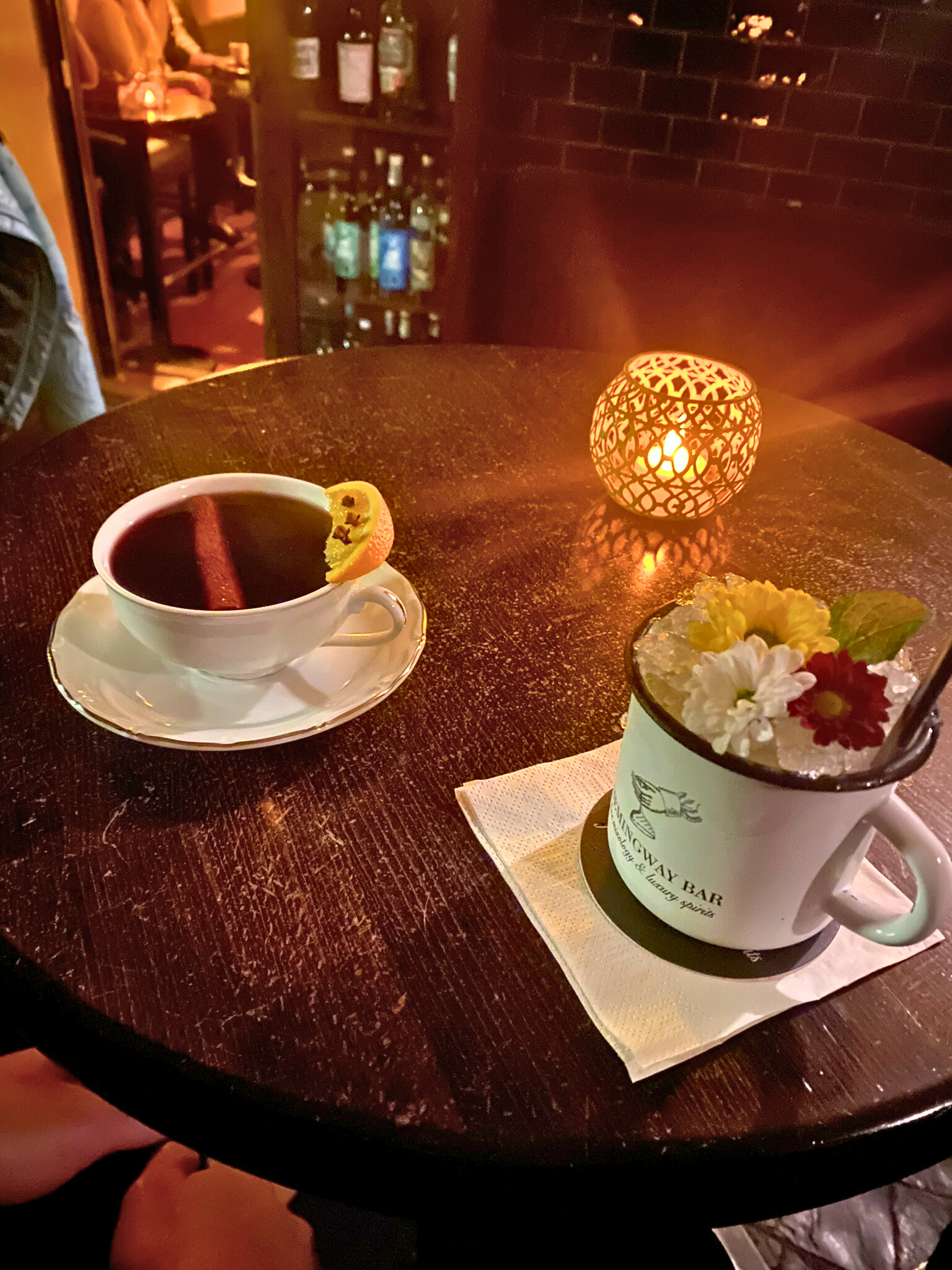
If you want a refined setting, jazz in the background, and a slightly dim restful mood, try Hemingway Bar — famous for cocktails. Better to reserve by phone; without a reservation you may wait at the door. As someone who likes fresh, light cocktails, I loved the Mistress. Recommended 🙂 Map location blue 8.
Also Worth Visiting
Time is limited and there is so much to see. Czechia especially has potential for days of exploring. We had many more places on our list, but when planning I prioritize the most ideal spots with least time loss — or what we most want to see — and have to cut some. If they fit your plans, add these:
1. Prague Riding School
Once a riding school, now used for painting exhibitions. Inside Prague Castle. Map location purple 57.
2. Letná Park
A kind of escape point inside the city, with many amenities for socializing and forest bathing. Map location purple 54.
3. Strahov Monastery
Near the castle area; its most interesting feature is an 800-year-old library inside. Map location purple 47.
4. Petřín Observation Tower
An observation tower on Prague’s highest hill. Not extremely tall, but ticketed if you want to climb. Map location purple 56.
5. Kampa Museum
Near the Kafka Museum, a true modern art museum. Free on the first Wednesday of each month. Map location purple 55.
6. Join a Czech Night or Medieval Entertainment
Venues stage traditional Czech nights or medieval entertainment with dance shows. Many are a bit outside the city — reach them by rental car or public transport, or buy online tickets for a tour.
7. Take a Mini Tour on Nostalgic Tram 42
Like nostalgic trams elsewhere, it visits major tourist points. Tickets can be bought online — check operating hours.
8. Prague National Gallery
Often confused with the National Museum, but different. The gallery leans more toward modern art and painting exhibitions, housed in various historic buildings around the city. Check which buildings hold which exhibitions before you go.
Prague is not finished yet. If you still have time or want nearby places:
- Karlovy Vary, where Atatürk once sought spa treatment and which Turkish tours still visit;
- Dresden in Germany or Vienna in Austria, reachable by train in 2–3 hours;
- If you rent a car, the Nazi Terezín concentration camp on the Dresden route.
Don’t Leave Without Seeing
To understand Czech history and culture — and to truly say you have seen Prague — do not leave without Prague Castle and Charles Bridge.
Don’t Leave Without Eating
Roast duck, goulash, and of course svíčková 🙂